I originally posted this on my personal blog, but I decided to repost it here at Retro Science Fiction Reviews, because I know that some people who follow this blog, don't follow my personal blog. And since followers of this blog are likely to be interested in vintage speculative fiction in general and the Retro Hugos in particular, I figure that this is of interest to all readers of this blog.
This is not the post I wanted to write. I had been planning to review The Old Guard, which I finally got around to watching, and maybe write a quick con report about the virtual 2020 NASFIC.
However, the fallout from CoNZealand continues to suck all oxygen out of the room. The good thing is that the con coms of the upcoming Worldcons DisCon III and Chicon and as well as those bidding for future Worldcons have learned from some of the problems at CoNZealand. The bad thing is that they haven't necessarily learned the right lessons.
The Memphis Worldcon bid for 2023 has posted a statement about their commitment to diversity and inclusion, which is a good thing. Unfortunately, they also felt the need to let us know in that statement that they don't intend to hold the 1948 Retro Hugos, if their bid wins. The full statement is here and a detailed discussion may be found at File 770. There also are two proposals by David Wallace and Camestros Felapton, which would basically result in a Retro Hugos light (only one or two categories per year at the discretion of a given Worldcon).
Now I do have some sympathy for the reluctance of Worldcons to hold Retro Hugos, because the Retro Hugos mean a lot of work and extra expenses and the participation could be better. We should maybe also rethink whether the Retro Hugos really need a trophy with an elaborate base and a dedicated ceremony, since the winners are all dead (though one 1945 Retro Hugo winner, the Best Dramatic Presentation co-winner The Canterville Ghost, still has a surviving castmember, Margaret O'Brien, now 82 years old) and descendants often aren't present to accept the award either.
However, I don't see the need to make a decision about the Retro Hugos now, since no one expected a statement three years before the con. CoNZealand didn't announce that they were going to hold the 1945 Retro Hugos until late 2019, a few months before the con. And because the 1946 Retro Hugos were already held in 1996, there won't be any Retro Hugos until 2022 anyway, so there really was no need to make a statement now. And there was certainly no need to make a statement regarding the 1948 Retro Hugos in the context of a statement on diversity and inclusion, since that implies that the Retro Hugos and an interest in older SFF in general are considered so offensive now that they violate the ideals of diversity and inclusion. And yes, this was maybe not the intention, but that's how it comes across.
Besides, most of the criticism of CoNZealand focussed on the 2020 Hugo ceremony. I have already written thousands of words about the 2020 Hugo ceremony and linked to other people's takes on it and the short version is, "Yes, the criticism of the 2020 Hugo ceremony and host George R.R. Martin is absolutely justified, because the ceremony was a disaster."
A lot of the criticism focussed on Martin's and Robert Silverberg's endless reminiscing about "the good old days" and particularly the drinking game worthy frequency with which Martin mentioned John W. Campbell. Again, those criticisms are absolutely justified, because a current year Hugo ceremony is no place to reminisce endlessly about events that happened before many of the finalists were even born.
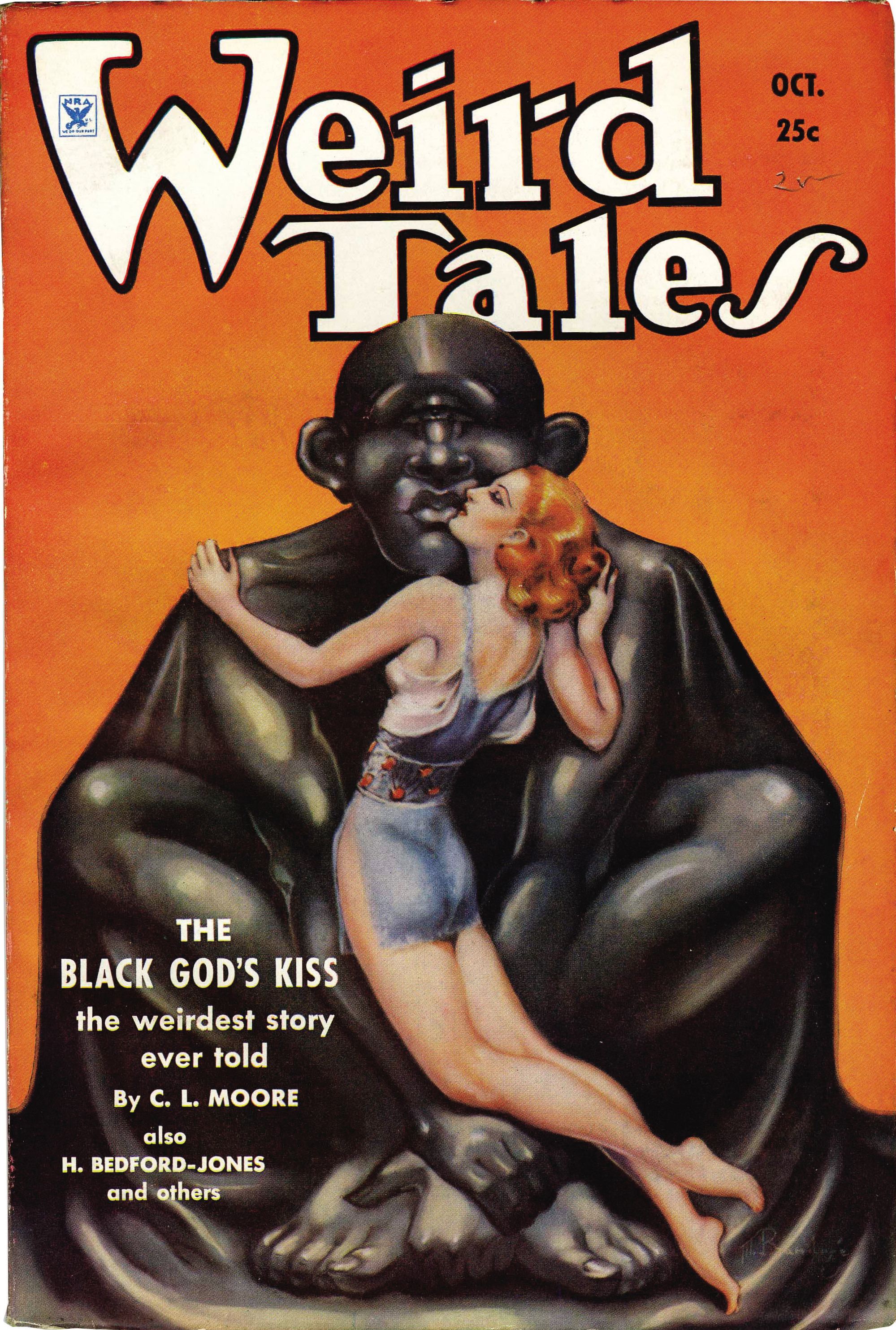
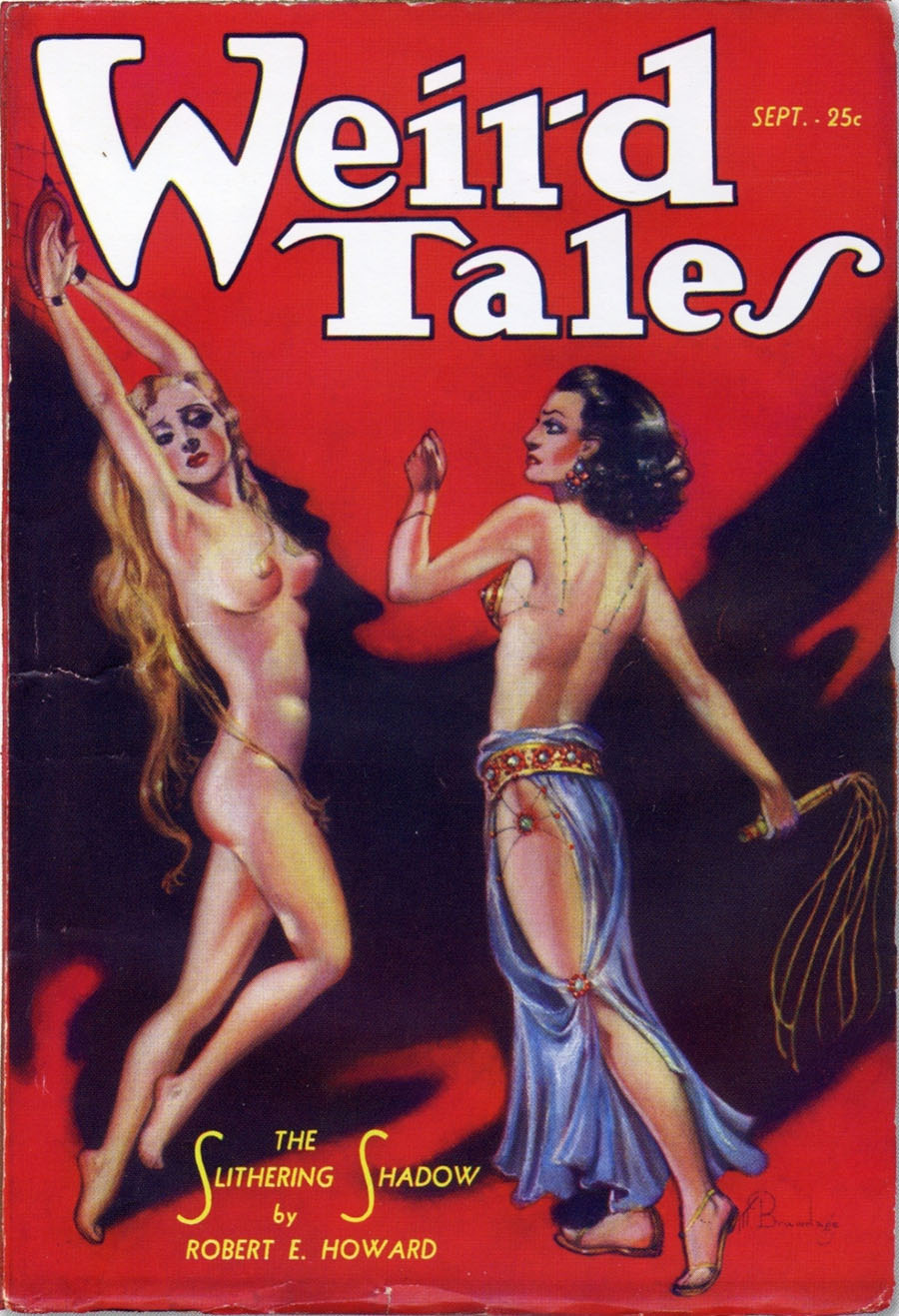
However, somehow the criticism of the 2020 Hugo ceremony has become conflated with the 1945 Retro Hugos, where the winners included John W. Campbell and the Cthulhu Mythos as well as Leigh Brackett, Margaret Brundage, Clifford D. Simak, Ray Bradbury, Fritz Leiber, Superman, The Canterville Ghost and Curse of the Cat People (as well as the fanzine Voice of the Imagi-Nation, which some people also have problems with). Of course, there was nothing wrong with the 1945 Retro Hugo ceremony (and it was much shorter than the regular one) except for some technical issues and that it had to share a timeslot with the Sir Julius Vogel Awards, leaving the Sir Julius Vogel Award winners feel shafted. However, many complaints about the 1945 Retro Hugo winners focussed solely on the wins for Campbell and Cthulhu (and sometimes Voice of the Imagi-Nation), but completely ignored all other winners. The overwhelming majority of those complaining were also people who had paid zero attention to the Retro Hugos before, who didn't bother to nominate and probably didn't bother to vote either, who never discussed the finalists or tried to boost finalists they find less objectionable than Campbell and Cthulhu. Again, I have already discussed all this in great detail here and here.
Now no one is obliged to care about the Retro Hugos. However, if you didn't nominate and vote, you don't get complain about the results. I also understand the frustration that Retro Hugo voters keep voting for familiar names like John W. Campbell and weak early stories by future stars of the genre over better works, because I share it. However, unlike many other folks, I didn't complain, but decided to do something about it, so I started the Retro Hugo Recommendation Spreadsheet and Retro Science Fiction Reviews to help potential Retro Hugo nominators and voters make more informed choices. Because I believe that it's better to try and fix something than destroy or abolish something that some people enjoy.
And while I understand why Worldcons are reluctant to give out Retro Hugos due to the work and expense involved, I really don't understand the intense hatred they engender in some fans. There are a lot of things going on at Worldcons that I personally don't care about, but that doesn't mean I want to take those things away from the people who do enjoy them. I simply focus on the things that give me joy and ignore the rest.
However, the current campaign against the Retro Hugos is part of a larger trend to dismiss the past of our genre as racist, sexist and irrelevant. Also witness the recent debate about the SFF canon, what it is and whether it is relevant with contributions by John Scalzi (here and here), Nina Allan, Camestros Felapton (here and here), the Hugo Book Club, Font Folly, Steve Davidson, Doris V. Sutherland, Aidan Moher and others. The canon discussion is mostly civil (and the only uncivil are the usual idiots I haven't linked here) and also makes a lot of good points, such as that there is no one fixed SFF canon, but that individual people have different works which are important to them, that canons can be abused as a form of gatekeeping, that it's not necessary to read classic SFF works, unless you enjoy them or want to write an academic work about SFF. However, pretty much everybody who is interested in older SFF has experienced hostility about this interest, even if we don't go around and tell people that they're not "real fans" (TM), unless they have read the entire output of Heinlein, Asimov, Lovecraft, etc... (and in that case, I wouldn't be a "real fan" (TM) either). Witness Jason Sanford saying that the Retro Hugo voters are "a small group of people stuck in the past giving today’s genre the middle finger", never mind that most Retro Hugo voters are Hugo voters as well. Or the person who called me a Nazi on Twitter for tweeting about the Retro Hugo winners, until I blocked them.
As I said before, no one has to care about older SFF and no one has to read it, if they don't want to. But attacking people for being interested in older SFF and enjoying the Retro Hugos is not okay. Nor is everybody who's interested in older SFF a reactionary fascist, even if received wisdom claims that the SFF of the golden age was all racist and sexist stories about straight white American men in space, lorded over by the twin spectres of Campbell and Lovecraft.
There is just one problem: The received wisdom is wrong. Because the golden age (intended here as a designation for a specific time period, not a value judgment) was more than just Campbell and Astounding. It was also a lot more diverse than most people think, as I explained in a three part post last year.
True, John W. Campbell did have an outsized influence on science fiction of the 1940s due to a combination of genuine skill as an editor, an eye for promising writers and knowledge of what the audience he cultivated wanted to read as well as the stroke of luck that Astounding Science Fiction had the considerable financial clout of the Street & Smith publishing empire behind it, allowing Campbell to pay better than his competitors and on acceptance, whereas the father of Robert E. Howard had to pester Weird Tales for missing payments until 1942, six years after Howard committed suicide. And because Astounding was the highest paying SFF mag, he pretty much got the first right of refusal for every science fiction story written between 1937 and 1950, unless the author managed to sell it to the even better paying so-called "slicks" or really didn't get along with Campbell. Would Campbell's influence have been as great, if he had wound up as editor of - say - Startling Stories or Thrilling Wonder Stories? I doubt it.
Campbell's influence was further exarcerbated by anthologists who reprinted a lot more stories from Astounding than from other magazines. For example, The Great Science Fiction Stories anthologies edited by Isaac Asimov and Martin H. Greenberg often have a significant overlap with the Retro Hugo finalists for the respective year and mainly collect stories from Astounding with a few other magazines thrown in. However, Asimov was part of Campbell's stable of writers, shared Campbell's vision of science fiction to a certain degree (though he was known to subvert it on occasion) and supported the myth that Campbell saved science fiction from rayguns and bug-eyed monsters and made it respectable. And having read some of a letters a very young Isaac Asimov wrote to various science fiction magazines during the 1930s, often to complain about the horror of their being women in those stories, it's clear that making science fiction respectable and getting rid of all of those bug-eyed monsters and women in brass bikinis was important to him. Meanwhile, Asimov is on record for disliking Weird Tales, which he called "a hoary old institution". The choices he made for the anthologies he edited obviously reflect his biases.
Talking of Weird Tales, there is quite a lot of scholarship about the magazine and its writers - however, most of that scholarship focusses solely on H.P. Lovecraft and Robert E. Howard and their overlapping circles. However, if you flips through an actual issue of Weird Tales - a lot easier thanks to the magic of the Internet Archive, since physical issues can cost hundreds of dollars - you'll quickly see that there was a lot more to the "unique magazine" than just Lovecraft and Howard, Cthulhu and Conan. In fact, the Lovecraftian horror stories and early sword and sorcery are in the minority in the actual magazine, outnumbered by gothic horror, ghost stories, occult investigators and proto-urban fantasy. Weird Tales' most popular author was not Lovecraft or Howard but Seabury Quinn, whose stories about the occult detective Jules de Grandin and his partner Doctor Trowbridge repeatedly saved Weird Tales from the brink of bankruptcy. Personally, I don't quite get the popularity of the Jules de Grandin stories - Manly Wade Wellman's John Thunstone and Judge Pursuivant stories are much better examples of the occult detective genre - though the not so subtle hints that Jules de Grandin and Doctor Trowbridge are more than just good friends are certainly interesting. If you look at an actual issue of Weird Tales, you'll also note how many women writers and readers the magazine had and how little is known about them. Would we know more about Allison V. Harding, one of the ten most prolific contributors to Weird Tales, if Robert Weinberg had not dismissed her stories "as fillers that just take up space"?
But just as Weird Tales was more than just Conan and Cthulhu, Campbellian science fiction with its competent white male protagonists and its focus on "hard" science (which often turns out to be nonsense upon closer examination) was only one strand of SFF in the 1940s. There was a whole galaxy beyond Campbellian science fiction and even Campbell published a lot of non-Campbellian stories such as the City cycle by Clifford D. Simak, "No Woman Born" and "Judgment Night" by C.L. Moore or "The Children's Hour" by Henry Kuttner and C.L. Moore, all of which are excellent. However, the stories found in Weird Tales, Planet Stories, Amazing Stories, Thrilling Wonder Stories, Startling Stories, Super Science Stories, Famous Fantastic Mysteries, etc... are often more interesting than those published in Astounding. Not to mention the stories and novels published beyond the confines of the American pulp magazine market. But stories not published in Astounding are more likely to be forgotten because of the prevalent narrative that Astounding was the best magazine of the era. And indeed, I came across a lot of great stories in the course of the Retro Reviews project that have never been reprinted at all, while a stinker like "Deadline" by Cleve Cartmill (a story even its author disliked) did rack up several reprints and translations over the years, even though the only thing of interest about that story is the handy primer on how to build an atom bomb that is hidden inside a page of bad technobabble.
Another issue - and one that should surprise absolutely no one - is that women authors are more likely to be forgotten than men. Not that there aren't plenty of men who are forgotten as well - who is still familiar with Emil Petaja, Carl Jacobi, Nelson S. Bond or Albert de Pina (very likely one of the few Latinx SFF authors of the era) these days? However, the only women SFF writers of the golden age who are still remembered nowadays are C.L. Moore and Leigh Brackett and even their works are not always easy to find. For example, Leigh Brackett's Shadow Over Mars, this year's Retro Hugo winner for Best Novel, is out of print. And a lot of C.L. Moore's collaborations with Henry Kuttner have been reprinted under his name alone. Meanwhile, other women SFF writers active during the golden age like Margaret St. Clair, Allison V. Harding, Mary Elizabeth Counselman, Dorothy Quick, Alice-Mary Schnirring, Greye La Spina, Leslie F. Stone, Mona Farnsworth, Clare Winger Harris, Jane Rice, Lilith Lorraine (one of the few indigenous writers of early SFF), Ruth Washburn, etc... are barely remembered at all, even if some of them were popular authors during their lifetime. Some of these women are so obscure that we don't know anything about them at all - all we have are the stories they wrote in the scanned pages of yellowing pulp magazines.
Every twenty years or so, we seem to be experiencing a surge of women and writers of colour entering the genre, making a splash, winning awards and generating headlines like "Women and people of colour are writing SFF now". But then, those women and writers of colour are pushed out, ignored and forgotten, until the next batch comes along. Witness how the golden age became the realm of Campbellian white dude science fiction and how Weird Tales, the most woman-friendly magazine of the era, was reduced to Conan and Cthulhu, Howard and Lovecraft with everybody else forgotten. Witness how the women writers of the silver age were dismissed as "little housewives writing domestic stories set in galactic suburbia" by those who came after them. Witness how the Cyberpunks consigned the feminist SFF of the 1970s to the memory hole as boring and irrelevant. Witness how women writers of epic fantasy of the 1970s and 1980s are forgotten and ignored, while Robert Jordan, Raymond Feist and Terry Brooks are still considered important voices. Witness how the SFF community managed to completely ignore the many women writing urban fantasy, romantic space opera, paranormal romance, time travel romance and YA SFF to great success in the 1990s and 2000s, while celebrating men writing singularity fiction and New British Space Opera? Do today's champions of "The past is irrelevant, the golden age is now" honestly believe that it will be different this time around? Because I'm pretty sure it won't be.
And that's why reading older SFF is important. Because if you actually read the stuff, you'll quickly see that pretty much every bit of received wisdom - the golden age was all Campbell and competent white dudes in space and everything before was crap, the SFF of the late 1950s/early 1960s was just boring domestic galactic suburbia stuff until the New Wave came along, the science fiction of the 1970s was boring and irrelevant and only the cyberpunks made the genre relevant again, women and writers of colour did not write SFF before 1965/1990/2010/insert date here - is wrong. And that the genre was a lot more complex, a lot more diverse and a lot more interesting than than the one-note received wisdom narratives imply.
If you dive into old SFF, you'll find great stories that have been forgotten and classics who have experienced a visit from the suck fairy. You'll find trends and whole subgenres cropping up decades before they had a name (and not just obvious suspects like sword and sorcery either, but also a lot of urban fantasy and military SF years before they became subgenres), you'll find stories that are decades ahead of or behind their time. You'll also find that writers and fans seventy-five or fifty years ago were already discussing a lot of the issues we are still discussing today, albeit in different terms than we would use today.
There are discussions about sexism, racism and diversity - often phrased with cringeworthy clumsiness, but nonetheless present. You had people like a fan writer named Harold Wakefield unearthing "forgotten fantasists" in the pages of the fanzine The Acolyte (and how frustrated would Harold Wakefield be, if he knew that we still have to do the same thing today?). There are strong female characters to be found in the stories of the golden age and some of them even pass the Bechdel test. There are characters of colour, quite a few in fact. There are interracial relationships, which either pass unremarked or where the story makes an explicit point that banning interracial relationships is wrong (Robert E. Howard of all people addressed the issue repeatedly in his Kull stories and at one point literally had Kull smash miscegenation laws with his battle axe). There are sex scenes, some of them quite frank. There are references to drug use. There are subtle and not so subtle hints that some people are gay and that there's nothing wrong with that. There are even transgender characters, either coded in magical sex change stories such as "Adept's Gambit" by Fritz Leiber, which will be denied its chance at Retro Hugo glory by the decision of the Memphis Worldcon bid, or addressed outright like in the 1962 story "Roberta" by Margaret St. Clair, which I reviewed for Galactic Journey last year. There also are a lot of explicitly anti-colonialist and anti-capitalist stories, many of them published in that bastion of Socialism and anti-colonialism Planet Stories. To reduce the golden age to just Campbellian science fiction and Lovecraftian horror is to deny the existence of all of those other stories.
Steve J. Wright, comrade-in-arms on the Retro Reviews project, makes some very similar points to mine in this great post on his blog. He also wonders whether our efforts to make the Retro Hugos better and unearth all of the interesting stuff that was going on beyond Campbellian science fiction are futile, since the Retro Hugo voters keep voting for familiar names like Campbell and Heinlein or those truly dreadful Buck Rogers comics anyway. However, as Steve also notes, we have been making some headway. There was a radio drama on the Best Dramatic Presentation ballot and several more on the longlist. The Best Related Work category likely wouldn't have existed without the Retro Hugo Recommendation Spreadsheet and the work done by Steve, N. and others to track down potential nominees. I also doubt that nigh forgotten writers like Allison V. Harding and Dorothy Quick would have made the longlist, if not for our efforts. Ditto for Babette Rosmond, editor of The Shadow and Doc Savage, who just missed the Best Editor ballot. And talking of editors, should we make a push to put John W. Campbell's long suffering editorial assistant Kay Tarrant on the ballot for future Retro Hugos, in case they still exist? And I hope they will, because frankly, it's frustrating to have the whole project cut short, just as we were making headway, because some people who never paid any attention don't like the results.
Besides, as Steve also says, just giving up would mean abandoning the history of our genre to the reactionary fans and to the received wisdom that Campbell was the greatest editor of the 1940s and that Campbellian science fiction ruled. Because the reactionaries are not giving up. Retro Hugos or not, they're still here and they're still pushing their version of what the gilded past of our genre was like. And if no one counters them, that narrative will be the only one there is.
In his post on the Retro Hugo debate, Camestros Felapton points out that the Far Right of our genre - various offshots of the Sad and Rabid Puppy campaigns as well as some established Lovecraft and Campbell fanatics - are actively trying to claim the pulp era for their movement. They can't quite agree which parts of the pulp era to claim for their own - some of them favour Campbellian science fiction and some of them hate Campbell with the same passion as their political opposites - however, their idea of what pulp SFF was like is highly reductionist and sometimes downright wrong. Hence, you get such howlers that sword and sorcery was a quintessentially masculine genre and that women can't write it (they grudgingly admit the existence of C.L. Moore and Jirel of Joiry, but declare her "not really sword and sorcery") and that hardly any women were reading Weird Tales, even though the letter columns indicate a high percentage of female readers (ETA: Angeline B. Adams takes a detailed look at the women who wrote to Weird Tales and quotes from their letters). You get claims that SFF of the pulp era was steeped in Christian values, which again is very wrong. You do find stories wherein Christianity plays a role and is explicitly addressed such as Leigh Brackett's "The Veil of Astellar", C.L. Moore's Jirel of Joiry stories, C.S. Lewis' Space Trilogy and Ross Rocklynne's "Intruders from the Stars" (which was a lot more entertaining than it has any right to be), but such stories are in the minority. Finally, you also get people claiming that golden age science fiction was all apolitical fun with no political or social messages at all, which is complete nonsense, whether it's the "genocide is good" messaging of "Arena" by Fredric Brown or the fact that many of Leigh Brackett's protagonists are literal social justice warriors.
Now other people may disagree, but I for one am not willing to abandon the past of our genre to the dominant narrative that it was just straight white American men being competent in space and straight white men being incompetent in the face of Lovecraftian horrors nor am I willing to let the reactionary forces continue to dominate the discussion about vintage SFF.
Do we need Retro Hugos to discuss, reappraise and honour vintage SFF? Not necessarily, but they are a useful vehicle to raise the profile of worthy older works which may have been overlooked. Plus, the intense focus on a single year is a good thing, because ideally it makes you look beyond the usual suspects and the stories and authors you have loved for ages.
However, Retro Hugos or not, I am going to continue discussing vintage SFF. Because I enjoy it and I'd rather talk about a story that no one has talked about in seventy or eighty years than offer the umpteenth hot take on Network Effect or Harrow the Ninth or The City We Became to the world, even though I liked all of those books, too.
ETA: Hampus Eckerman also shares his thoughts on the Retro Hugos and why they have value.
***
This is not the post I wanted to write. I had been planning to review The Old Guard, which I finally got around to watching, and maybe write a quick con report about the virtual 2020 NASFIC.
However, the fallout from CoNZealand continues to suck all oxygen out of the room. The good thing is that the con coms of the upcoming Worldcons DisCon III and Chicon and as well as those bidding for future Worldcons have learned from some of the problems at CoNZealand. The bad thing is that they haven't necessarily learned the right lessons.
The Memphis Worldcon bid for 2023 has posted a statement about their commitment to diversity and inclusion, which is a good thing. Unfortunately, they also felt the need to let us know in that statement that they don't intend to hold the 1948 Retro Hugos, if their bid wins. The full statement is here and a detailed discussion may be found at File 770. There also are two proposals by David Wallace and Camestros Felapton, which would basically result in a Retro Hugos light (only one or two categories per year at the discretion of a given Worldcon).
Now I do have some sympathy for the reluctance of Worldcons to hold Retro Hugos, because the Retro Hugos mean a lot of work and extra expenses and the participation could be better. We should maybe also rethink whether the Retro Hugos really need a trophy with an elaborate base and a dedicated ceremony, since the winners are all dead (though one 1945 Retro Hugo winner, the Best Dramatic Presentation co-winner The Canterville Ghost, still has a surviving castmember, Margaret O'Brien, now 82 years old) and descendants often aren't present to accept the award either.
However, I don't see the need to make a decision about the Retro Hugos now, since no one expected a statement three years before the con. CoNZealand didn't announce that they were going to hold the 1945 Retro Hugos until late 2019, a few months before the con. And because the 1946 Retro Hugos were already held in 1996, there won't be any Retro Hugos until 2022 anyway, so there really was no need to make a statement now. And there was certainly no need to make a statement regarding the 1948 Retro Hugos in the context of a statement on diversity and inclusion, since that implies that the Retro Hugos and an interest in older SFF in general are considered so offensive now that they violate the ideals of diversity and inclusion. And yes, this was maybe not the intention, but that's how it comes across.
Besides, most of the criticism of CoNZealand focussed on the 2020 Hugo ceremony. I have already written thousands of words about the 2020 Hugo ceremony and linked to other people's takes on it and the short version is, "Yes, the criticism of the 2020 Hugo ceremony and host George R.R. Martin is absolutely justified, because the ceremony was a disaster."
A lot of the criticism focussed on Martin's and Robert Silverberg's endless reminiscing about "the good old days" and particularly the drinking game worthy frequency with which Martin mentioned John W. Campbell. Again, those criticisms are absolutely justified, because a current year Hugo ceremony is no place to reminisce endlessly about events that happened before many of the finalists were even born.
However, somehow the criticism of the 2020 Hugo ceremony has become conflated with the 1945 Retro Hugos, where the winners included John W. Campbell and the Cthulhu Mythos as well as Leigh Brackett, Margaret Brundage, Clifford D. Simak, Ray Bradbury, Fritz Leiber, Superman, The Canterville Ghost and Curse of the Cat People (as well as the fanzine Voice of the Imagi-Nation, which some people also have problems with). Of course, there was nothing wrong with the 1945 Retro Hugo ceremony (and it was much shorter than the regular one) except for some technical issues and that it had to share a timeslot with the Sir Julius Vogel Awards, leaving the Sir Julius Vogel Award winners feel shafted. However, many complaints about the 1945 Retro Hugo winners focussed solely on the wins for Campbell and Cthulhu (and sometimes Voice of the Imagi-Nation), but completely ignored all other winners. The overwhelming majority of those complaining were also people who had paid zero attention to the Retro Hugos before, who didn't bother to nominate and probably didn't bother to vote either, who never discussed the finalists or tried to boost finalists they find less objectionable than Campbell and Cthulhu. Again, I have already discussed all this in great detail here and here.
Now no one is obliged to care about the Retro Hugos. However, if you didn't nominate and vote, you don't get complain about the results. I also understand the frustration that Retro Hugo voters keep voting for familiar names like John W. Campbell and weak early stories by future stars of the genre over better works, because I share it. However, unlike many other folks, I didn't complain, but decided to do something about it, so I started the Retro Hugo Recommendation Spreadsheet and Retro Science Fiction Reviews to help potential Retro Hugo nominators and voters make more informed choices. Because I believe that it's better to try and fix something than destroy or abolish something that some people enjoy.
And while I understand why Worldcons are reluctant to give out Retro Hugos due to the work and expense involved, I really don't understand the intense hatred they engender in some fans. There are a lot of things going on at Worldcons that I personally don't care about, but that doesn't mean I want to take those things away from the people who do enjoy them. I simply focus on the things that give me joy and ignore the rest.
However, the current campaign against the Retro Hugos is part of a larger trend to dismiss the past of our genre as racist, sexist and irrelevant. Also witness the recent debate about the SFF canon, what it is and whether it is relevant with contributions by John Scalzi (here and here), Nina Allan, Camestros Felapton (here and here), the Hugo Book Club, Font Folly, Steve Davidson, Doris V. Sutherland, Aidan Moher and others. The canon discussion is mostly civil (and the only uncivil are the usual idiots I haven't linked here) and also makes a lot of good points, such as that there is no one fixed SFF canon, but that individual people have different works which are important to them, that canons can be abused as a form of gatekeeping, that it's not necessary to read classic SFF works, unless you enjoy them or want to write an academic work about SFF. However, pretty much everybody who is interested in older SFF has experienced hostility about this interest, even if we don't go around and tell people that they're not "real fans" (TM), unless they have read the entire output of Heinlein, Asimov, Lovecraft, etc... (and in that case, I wouldn't be a "real fan" (TM) either). Witness Jason Sanford saying that the Retro Hugo voters are "a small group of people stuck in the past giving today’s genre the middle finger", never mind that most Retro Hugo voters are Hugo voters as well. Or the person who called me a Nazi on Twitter for tweeting about the Retro Hugo winners, until I blocked them.
As I said before, no one has to care about older SFF and no one has to read it, if they don't want to. But attacking people for being interested in older SFF and enjoying the Retro Hugos is not okay. Nor is everybody who's interested in older SFF a reactionary fascist, even if received wisdom claims that the SFF of the golden age was all racist and sexist stories about straight white American men in space, lorded over by the twin spectres of Campbell and Lovecraft.
There is just one problem: The received wisdom is wrong. Because the golden age (intended here as a designation for a specific time period, not a value judgment) was more than just Campbell and Astounding. It was also a lot more diverse than most people think, as I explained in a three part post last year.
True, John W. Campbell did have an outsized influence on science fiction of the 1940s due to a combination of genuine skill as an editor, an eye for promising writers and knowledge of what the audience he cultivated wanted to read as well as the stroke of luck that Astounding Science Fiction had the considerable financial clout of the Street & Smith publishing empire behind it, allowing Campbell to pay better than his competitors and on acceptance, whereas the father of Robert E. Howard had to pester Weird Tales for missing payments until 1942, six years after Howard committed suicide. And because Astounding was the highest paying SFF mag, he pretty much got the first right of refusal for every science fiction story written between 1937 and 1950, unless the author managed to sell it to the even better paying so-called "slicks" or really didn't get along with Campbell. Would Campbell's influence have been as great, if he had wound up as editor of - say - Startling Stories or Thrilling Wonder Stories? I doubt it.
Campbell's influence was further exarcerbated by anthologists who reprinted a lot more stories from Astounding than from other magazines. For example, The Great Science Fiction Stories anthologies edited by Isaac Asimov and Martin H. Greenberg often have a significant overlap with the Retro Hugo finalists for the respective year and mainly collect stories from Astounding with a few other magazines thrown in. However, Asimov was part of Campbell's stable of writers, shared Campbell's vision of science fiction to a certain degree (though he was known to subvert it on occasion) and supported the myth that Campbell saved science fiction from rayguns and bug-eyed monsters and made it respectable. And having read some of a letters a very young Isaac Asimov wrote to various science fiction magazines during the 1930s, often to complain about the horror of their being women in those stories, it's clear that making science fiction respectable and getting rid of all of those bug-eyed monsters and women in brass bikinis was important to him. Meanwhile, Asimov is on record for disliking Weird Tales, which he called "a hoary old institution". The choices he made for the anthologies he edited obviously reflect his biases.
Talking of Weird Tales, there is quite a lot of scholarship about the magazine and its writers - however, most of that scholarship focusses solely on H.P. Lovecraft and Robert E. Howard and their overlapping circles. However, if you flips through an actual issue of Weird Tales - a lot easier thanks to the magic of the Internet Archive, since physical issues can cost hundreds of dollars - you'll quickly see that there was a lot more to the "unique magazine" than just Lovecraft and Howard, Cthulhu and Conan. In fact, the Lovecraftian horror stories and early sword and sorcery are in the minority in the actual magazine, outnumbered by gothic horror, ghost stories, occult investigators and proto-urban fantasy. Weird Tales' most popular author was not Lovecraft or Howard but Seabury Quinn, whose stories about the occult detective Jules de Grandin and his partner Doctor Trowbridge repeatedly saved Weird Tales from the brink of bankruptcy. Personally, I don't quite get the popularity of the Jules de Grandin stories - Manly Wade Wellman's John Thunstone and Judge Pursuivant stories are much better examples of the occult detective genre - though the not so subtle hints that Jules de Grandin and Doctor Trowbridge are more than just good friends are certainly interesting. If you look at an actual issue of Weird Tales, you'll also note how many women writers and readers the magazine had and how little is known about them. Would we know more about Allison V. Harding, one of the ten most prolific contributors to Weird Tales, if Robert Weinberg had not dismissed her stories "as fillers that just take up space"?
But just as Weird Tales was more than just Conan and Cthulhu, Campbellian science fiction with its competent white male protagonists and its focus on "hard" science (which often turns out to be nonsense upon closer examination) was only one strand of SFF in the 1940s. There was a whole galaxy beyond Campbellian science fiction and even Campbell published a lot of non-Campbellian stories such as the City cycle by Clifford D. Simak, "No Woman Born" and "Judgment Night" by C.L. Moore or "The Children's Hour" by Henry Kuttner and C.L. Moore, all of which are excellent. However, the stories found in Weird Tales, Planet Stories, Amazing Stories, Thrilling Wonder Stories, Startling Stories, Super Science Stories, Famous Fantastic Mysteries, etc... are often more interesting than those published in Astounding. Not to mention the stories and novels published beyond the confines of the American pulp magazine market. But stories not published in Astounding are more likely to be forgotten because of the prevalent narrative that Astounding was the best magazine of the era. And indeed, I came across a lot of great stories in the course of the Retro Reviews project that have never been reprinted at all, while a stinker like "Deadline" by Cleve Cartmill (a story even its author disliked) did rack up several reprints and translations over the years, even though the only thing of interest about that story is the handy primer on how to build an atom bomb that is hidden inside a page of bad technobabble.
Another issue - and one that should surprise absolutely no one - is that women authors are more likely to be forgotten than men. Not that there aren't plenty of men who are forgotten as well - who is still familiar with Emil Petaja, Carl Jacobi, Nelson S. Bond or Albert de Pina (very likely one of the few Latinx SFF authors of the era) these days? However, the only women SFF writers of the golden age who are still remembered nowadays are C.L. Moore and Leigh Brackett and even their works are not always easy to find. For example, Leigh Brackett's Shadow Over Mars, this year's Retro Hugo winner for Best Novel, is out of print. And a lot of C.L. Moore's collaborations with Henry Kuttner have been reprinted under his name alone. Meanwhile, other women SFF writers active during the golden age like Margaret St. Clair, Allison V. Harding, Mary Elizabeth Counselman, Dorothy Quick, Alice-Mary Schnirring, Greye La Spina, Leslie F. Stone, Mona Farnsworth, Clare Winger Harris, Jane Rice, Lilith Lorraine (one of the few indigenous writers of early SFF), Ruth Washburn, etc... are barely remembered at all, even if some of them were popular authors during their lifetime. Some of these women are so obscure that we don't know anything about them at all - all we have are the stories they wrote in the scanned pages of yellowing pulp magazines.
Every twenty years or so, we seem to be experiencing a surge of women and writers of colour entering the genre, making a splash, winning awards and generating headlines like "Women and people of colour are writing SFF now". But then, those women and writers of colour are pushed out, ignored and forgotten, until the next batch comes along. Witness how the golden age became the realm of Campbellian white dude science fiction and how Weird Tales, the most woman-friendly magazine of the era, was reduced to Conan and Cthulhu, Howard and Lovecraft with everybody else forgotten. Witness how the women writers of the silver age were dismissed as "little housewives writing domestic stories set in galactic suburbia" by those who came after them. Witness how the Cyberpunks consigned the feminist SFF of the 1970s to the memory hole as boring and irrelevant. Witness how women writers of epic fantasy of the 1970s and 1980s are forgotten and ignored, while Robert Jordan, Raymond Feist and Terry Brooks are still considered important voices. Witness how the SFF community managed to completely ignore the many women writing urban fantasy, romantic space opera, paranormal romance, time travel romance and YA SFF to great success in the 1990s and 2000s, while celebrating men writing singularity fiction and New British Space Opera? Do today's champions of "The past is irrelevant, the golden age is now" honestly believe that it will be different this time around? Because I'm pretty sure it won't be.
And that's why reading older SFF is important. Because if you actually read the stuff, you'll quickly see that pretty much every bit of received wisdom - the golden age was all Campbell and competent white dudes in space and everything before was crap, the SFF of the late 1950s/early 1960s was just boring domestic galactic suburbia stuff until the New Wave came along, the science fiction of the 1970s was boring and irrelevant and only the cyberpunks made the genre relevant again, women and writers of colour did not write SFF before 1965/1990/2010/insert date here - is wrong. And that the genre was a lot more complex, a lot more diverse and a lot more interesting than than the one-note received wisdom narratives imply.
If you dive into old SFF, you'll find great stories that have been forgotten and classics who have experienced a visit from the suck fairy. You'll find trends and whole subgenres cropping up decades before they had a name (and not just obvious suspects like sword and sorcery either, but also a lot of urban fantasy and military SF years before they became subgenres), you'll find stories that are decades ahead of or behind their time. You'll also find that writers and fans seventy-five or fifty years ago were already discussing a lot of the issues we are still discussing today, albeit in different terms than we would use today.
There are discussions about sexism, racism and diversity - often phrased with cringeworthy clumsiness, but nonetheless present. You had people like a fan writer named Harold Wakefield unearthing "forgotten fantasists" in the pages of the fanzine The Acolyte (and how frustrated would Harold Wakefield be, if he knew that we still have to do the same thing today?). There are strong female characters to be found in the stories of the golden age and some of them even pass the Bechdel test. There are characters of colour, quite a few in fact. There are interracial relationships, which either pass unremarked or where the story makes an explicit point that banning interracial relationships is wrong (Robert E. Howard of all people addressed the issue repeatedly in his Kull stories and at one point literally had Kull smash miscegenation laws with his battle axe). There are sex scenes, some of them quite frank. There are references to drug use. There are subtle and not so subtle hints that some people are gay and that there's nothing wrong with that. There are even transgender characters, either coded in magical sex change stories such as "Adept's Gambit" by Fritz Leiber, which will be denied its chance at Retro Hugo glory by the decision of the Memphis Worldcon bid, or addressed outright like in the 1962 story "Roberta" by Margaret St. Clair, which I reviewed for Galactic Journey last year. There also are a lot of explicitly anti-colonialist and anti-capitalist stories, many of them published in that bastion of Socialism and anti-colonialism Planet Stories. To reduce the golden age to just Campbellian science fiction and Lovecraftian horror is to deny the existence of all of those other stories.
Steve J. Wright, comrade-in-arms on the Retro Reviews project, makes some very similar points to mine in this great post on his blog. He also wonders whether our efforts to make the Retro Hugos better and unearth all of the interesting stuff that was going on beyond Campbellian science fiction are futile, since the Retro Hugo voters keep voting for familiar names like Campbell and Heinlein or those truly dreadful Buck Rogers comics anyway. However, as Steve also notes, we have been making some headway. There was a radio drama on the Best Dramatic Presentation ballot and several more on the longlist. The Best Related Work category likely wouldn't have existed without the Retro Hugo Recommendation Spreadsheet and the work done by Steve, N. and others to track down potential nominees. I also doubt that nigh forgotten writers like Allison V. Harding and Dorothy Quick would have made the longlist, if not for our efforts. Ditto for Babette Rosmond, editor of The Shadow and Doc Savage, who just missed the Best Editor ballot. And talking of editors, should we make a push to put John W. Campbell's long suffering editorial assistant Kay Tarrant on the ballot for future Retro Hugos, in case they still exist? And I hope they will, because frankly, it's frustrating to have the whole project cut short, just as we were making headway, because some people who never paid any attention don't like the results.
Besides, as Steve also says, just giving up would mean abandoning the history of our genre to the reactionary fans and to the received wisdom that Campbell was the greatest editor of the 1940s and that Campbellian science fiction ruled. Because the reactionaries are not giving up. Retro Hugos or not, they're still here and they're still pushing their version of what the gilded past of our genre was like. And if no one counters them, that narrative will be the only one there is.
In his post on the Retro Hugo debate, Camestros Felapton points out that the Far Right of our genre - various offshots of the Sad and Rabid Puppy campaigns as well as some established Lovecraft and Campbell fanatics - are actively trying to claim the pulp era for their movement. They can't quite agree which parts of the pulp era to claim for their own - some of them favour Campbellian science fiction and some of them hate Campbell with the same passion as their political opposites - however, their idea of what pulp SFF was like is highly reductionist and sometimes downright wrong. Hence, you get such howlers that sword and sorcery was a quintessentially masculine genre and that women can't write it (they grudgingly admit the existence of C.L. Moore and Jirel of Joiry, but declare her "not really sword and sorcery") and that hardly any women were reading Weird Tales, even though the letter columns indicate a high percentage of female readers (ETA: Angeline B. Adams takes a detailed look at the women who wrote to Weird Tales and quotes from their letters). You get claims that SFF of the pulp era was steeped in Christian values, which again is very wrong. You do find stories wherein Christianity plays a role and is explicitly addressed such as Leigh Brackett's "The Veil of Astellar", C.L. Moore's Jirel of Joiry stories, C.S. Lewis' Space Trilogy and Ross Rocklynne's "Intruders from the Stars" (which was a lot more entertaining than it has any right to be), but such stories are in the minority. Finally, you also get people claiming that golden age science fiction was all apolitical fun with no political or social messages at all, which is complete nonsense, whether it's the "genocide is good" messaging of "Arena" by Fredric Brown or the fact that many of Leigh Brackett's protagonists are literal social justice warriors.
Now other people may disagree, but I for one am not willing to abandon the past of our genre to the dominant narrative that it was just straight white American men being competent in space and straight white men being incompetent in the face of Lovecraftian horrors nor am I willing to let the reactionary forces continue to dominate the discussion about vintage SFF.
Do we need Retro Hugos to discuss, reappraise and honour vintage SFF? Not necessarily, but they are a useful vehicle to raise the profile of worthy older works which may have been overlooked. Plus, the intense focus on a single year is a good thing, because ideally it makes you look beyond the usual suspects and the stories and authors you have loved for ages.
However, Retro Hugos or not, I am going to continue discussing vintage SFF. Because I enjoy it and I'd rather talk about a story that no one has talked about in seventy or eighty years than offer the umpteenth hot take on Network Effect or Harrow the Ninth or The City We Became to the world, even though I liked all of those books, too.
ETA: Hampus Eckerman also shares his thoughts on the Retro Hugos and why they have value.