Showing posts with label execution. Show all posts

Saturday, 26 November 2022

Retro Review: "The Hanging of Alfred Wadham" by E.F. Benson


Weird Tales August 1929


"The Hanging of Alfred Wadham" is a short story by E.F. Benson, which was first published in the December 1928 issue of the magazine Britannia and reprinted in the August 1929 issue of Weird Tales. The story may be found online here. This review will also be crossposted to Retro Science Fiction Reviews.

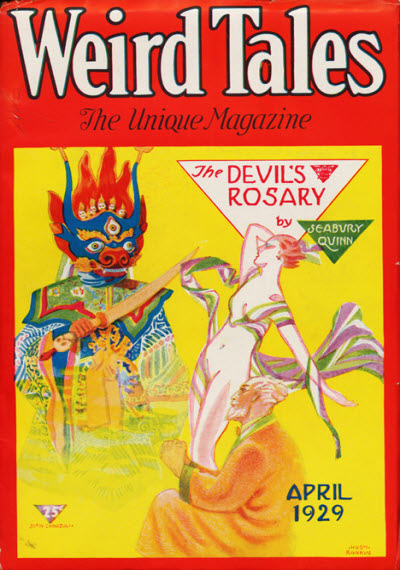
This story is another one which caught my eye via Hugh Rankin's striking interior art under his Doak pseudonym (Doak was Rankin's middle name). For some reason, Rankin did several drawings of hangings and executions under the Doak name, such as the interior art for "In a Dead Man's Shoes", which I reviewed recently. As before, Rankin also supplied to striking Art Deco cover art for this issue, illustrating the The Inn of Terror by Gaston LeRoux.

Hugh Rankin's interior art for "The Hanging of Alfred Wadham"

Though the standout story in this issue is not the cover story, but "The Shadow Kingdom" by Robert E. Howard, the story which introduced Kull of Atlantis as well as the Serpent Men to the world and is widely considered to be the first sword and sorcery story. I should probably do a Retro Review of that story eventually, especially since it's also a very good story.

Many authors who published in the pulps are completely forgotten these days and we know little to nothing about them. I feared this might be the case with E.F. Benson, but on the contrary, Benson was actually a very well-known British writer from a family of well-known people. His father was the Archbishop of Canterbury, one of his brothers wrote the words to "Land of Hope and Glory", another brother was also a writer as well as a priest and his sister was a writer and Egyptologist. To make matters even more impressive, E.F. Benson was a member of the Order of the British Empire. He was also gay and by necessity, given the time during which he lived, closeted.
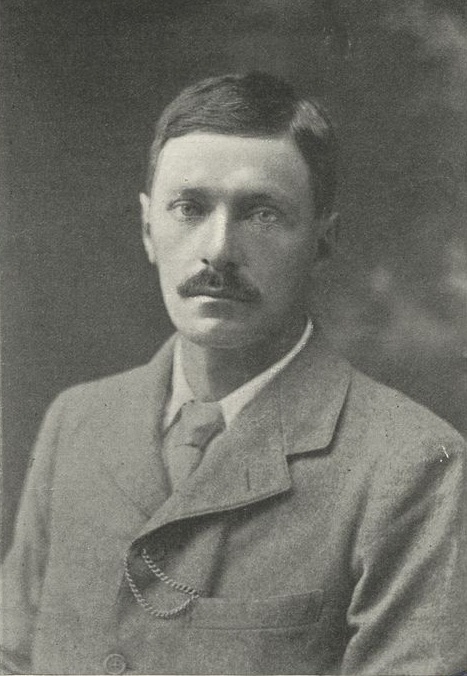
E.F. Benson

Benson's most famous work is the Mapp and Lucia series, a series of satirical novels about upper class people in a small town and their petty rivalries. I have to admit that I have never heard of those books, even though they spawned several sequels by other authors, two TV-adaptations, including one as late as 2014, and a lobster dish.

In addition to satirical novels about upper class people being jerks, Benson also wrote a lot of ghost stories and this is what brought him to the attention of H.P. Lovecraft, who wrote admiringly about Benson's work in "Supernatural Horror in Literature", and finally to Weird Tales.

But enough about the man. Let's talk about the story.

Warning! Spoilers beyond this point!

Compared to the other 1929 Weird Tales story featuring a hanging and interior art by Hugh Rankin, "The Hanging of Alfred Wadham" starts off slow with the unnamed first person narrator discussing a séance he attended with one Father Denys Hanbury. The medium conveyed some messages from a recently deceased friend of the narrator and the narrator is certain that the séance proves something, though whether it is communication with the dead or telepathy he is not sure. Father Denys, true to his profession, believes communication with the dead and impossible or demonic, though he is remarkably open-minded with regard to telepathy.

The narrator then explains that the medium talked about something that she could not have gotten from his mind, because the narrator did not know about it, but which was later confirmed by the dead friend's diary. Father Denys, however, still believes that communication with the dead is dangerous and shares a story of his own.

Such "take within a tale" framing devices were very common in the nineteenth and early twentieth century and pop up quite often in Weird Tales. What is notable about this one is that it's not only dull – we only ever get vague details about séance and what the medium said – but also written in a very stilted style. The (male) narrator also spends two paragraphs describing the beautiful hands of Father Denys. Even if I didn't know by this point that E.F. Benson was gay, that paragraph pretty much confirms it.
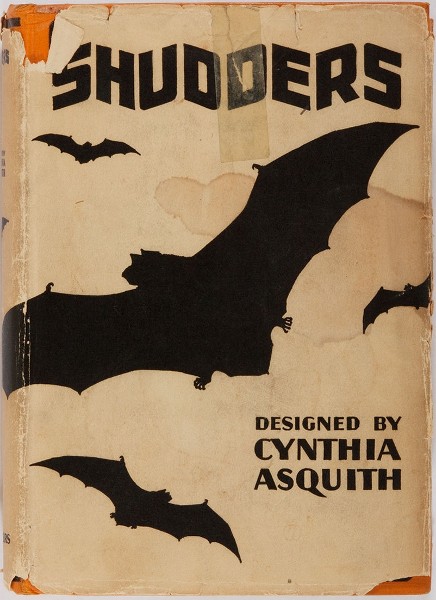
Shudders, edited by Cynthia Asquith

Once Father Denys of the beautiful hands starts his story, I hoped things were finally about to get good. Alas, Father Denys, who is a Catholic priest by the way, starts rambling on about the sacrament of confession, why it is important and why a priest may never ever repeat anything he heard in confession, even if remaining silent will have terrible consequences.

Next, we get an description of the crime allegedly committed by the titular Alfred Wadham. Alfred Wadham was the manservant of a "man of loose life" named Gerald Selfe. That "loose life" was the fact that Selfe was having an affair with a married woman. Someone found out about the affair and started blackmailing Selfe. Selfe went to the police, who investigated the case and quickly zeroed in on Alfred Wadham as a suspect.

The police have set a trap for Wadham, when Selfe is found with his throat slit one morning. Wadham is gone, but stains of human blood are found in his room. The police quickly apprehend him. Wadham proclaims his innocence of the murder, though he does admit to the blackmailing. Wadham declares that he realised that Selfe and the police were on to him and therefore fled. Alas, the judge and jury don't believe him and so Wadham is sentenced to death for murder.

Wadham is Catholic and so he meets Father Denys, who just happens to be the prison chaplain. True to his profession, Father Denys urges Wadham to confess to the murder and repent, but Wadham keeps insisting that he didn't do it. Since Wadham confesses plenty of other sins and crimes, Father Denys starts to believe him.

Father Denys is troubled by this case – not because an innocent man is about to be executed, but because he is not sure whether he should grant Wadham absolution for his other sins, since Wadham flat out refuses to confess to the murder.

More Spook Stories by E.F. Benson

Now it's worth remembering that E.F. Benson's father was an Anglican clergyman and Archbishop of Canterbury and that one of his brothers was an Anglican priest who converted to Catholicism, became a Catholic priest and wrote religious texts, so I probably shouldn't be surprised to see a theological argument in a story written by someone from such a background. However, as I've repeatedly said, I'm not religious, I dislike too much religion in my fiction and theological arguments literally make my eyes glaze over. And in this particular case, I had even less patience for theological arguments, because Alfred Wadham is about to be hanged for a crime he probably didn't commit, so who cares whether a priest absolves him from his sins or not? Never mind that granting absolution for sins is part of Father Denys' job.

On the night before the execution of Wadham, an former acquaintance named Horace Kennion visits Father Denys. Father Denys wants nothing to do with Kennion, because Kennion is a wicked man – more wicked than usual, because Father Denys reminds us that all humans are wicked and that "the life of us all is a tissue of misdeeds". Father Denys' hands must be very beautiful indeed for the narrator to willingly hang out with such a killjoy.

However, Kennion is very insistent to speak to Father Denys, because he needs to make a confession right now and his usual priest is not available. So Father Denys reluctantly hears his confession. Surprise: Kennion is the one who killed Gerald Selfe over a quarrel about a game of cards (though there was no mention of cards or a card table in the earlier description of the crime scene). After stabbing Selfe, Kennion went up to Wadham's room (Selfe had rung for Wadham earlier, but Wadham had already left, so Kennion knew the room would be empty) to wash off the blood – that's how the blood stains came to be found in Wadham's room.

Father Denys of course immediately entreats Kennion to go to the police and confess, so Wadham can be saved. However, Kennion has no intention of going to the police. And when Father Denys threatens that he will call the police, Kennion just grins and points out that he can't, because his faith forbids it. And besides, who would believe a priest who violated to sacrament of confession?

Father Denys now demands why Kennion felt the need to confess his sins at all and why to him specifically. Once again Kennion grins and tells Father Denys that he was very hurt when Father Denys broke off all contact with Kennion. And so he decided to get revenge by putting Father Denys in a terrible situation where there are no good choices. "I daresay I've got Sadie tastes, too, and they are being wonderfully indulged," Kennion says.

The Benson brothers
These are not actually the characters from this story, but E.F. Benson (on the right) and his brothers Arthur Christopher Benson (on the left, wrote the lyrics to "Land of Hope and Glory") and Robert Hugh Benson (the priest).

Now the vibes that I get from this exchange is that Father Denys and Kennion were lovers and that there may well have been some kink involved. But then Father Denys broke off the relationship and Kennion wants revenge. It's also notable that Kennion calls Father Denys by his first name, something which was extremely uncommon among upper class British men in the early twentieth century. Even Kennion's disdain for the doomed Alfred Wadham and his claim that Wadham has it coming for his other crimes – "Blackmail is a disgusting offence" – fits in with this, because gay men were often the target of blackmailers, back when gay relationships were still illegal. In fact, I wonder whether Kennion and his victim Gerald Selfe did not have a relationship, too. After all, it is explicitly stated that Kennion went up to Selfe's room.

I have to admit that though he is a murderer (double murderer to be exact) and generally horrible person, Horace Kennion is the most interesting character in this story. The narrator is a cypher, the victim Gerald Selfe is merely a prop required to get the story going and Alfred Wadham is more moral dilemma than character. As for Father Denys, he is an insufferably sanctimonious prick.

Case in point: Father Denys spends a few paragraphs detailing the terrible torment and suffering he experiences – a suffering that is not even "a needful and salutary experience to burn his sins away", but empty torment. Meanwhile, the actual victim here is not the moping priest with a crisis of conscience, but Alfred Wadham who is about to be executed for a crime he did not commit.

Though at least Father Denys does take some action rather than just sit around feeling sorry for himself. First, he goes to see the Cardinal, who basically tells him that he cannot violate the seal of confession. Then he goes to see the Home Secretary and tells him that Wadham is innocent, because the real murderer just confessed to him.

The Home Secretary is sympathetic, but tells Father Denys that he cannot pardon Wadham without more evidence. He also tells Father Denys to put the fear of God into the real murder to get him to confess and also gives the priest his phone number, just in case.

However, Father Denys doesn't need the phone number, because instead of putting the heat on Kennion, he goes straight to the prison, tells Wadham that he believes in his innocence and finally grants him absolution for all his other sins. Then we learn that Wadham went without flinching to his death. There is also a brief one sentence description of the trapdoor opening and the rope jumping and creaking. But otherwise, the hanging that Hugh Rankin drew so evocatively happens mostly off page.

This is rather disappointing, particularly compared to the visceral description of a hanging in Harold Markham's story "In a Dead Man's Shoes", published a few months before in the April 1929 issue of Weird Tales. Of course, Markham was describing a public hanging in the eighteenth century rather than a prison hanging in the early twentieth century, but there are plenty of much more evocative descriptions of twentieth century prison hanging than the single sentence that Benson gives us.

But then, the story isn't really about the hanging of Alfred Wadham at all, in spite of the title. It is about Father Denys and his moral dilemma. And now Father Denys finally comes to the point of his tale, namely why séances are bad and do not convey messages from the dead, but from some "evil and awful power impersonating them".

 After the execution, Father Denys goes home and Benson gives us more description of the weather than of the actual execution. However, mostly we get yet more musings from Father Denys. Even though he has just watched a man been hanged for a crime he did not commit, Father Denys feels serene and peaceful. After all, in Father Denys' view, it doesn't much matter that Alfred Wadham was hanged. After all, he had all his sins forgiven and still has his immortal soul and getting hanged for a crime he didn't commit is just like martyrdom.

Meanwhile, Father Denys makes it clear that the most important thing to him is that he kept his precious vow and did not commit the worst crime a Catholic priest can commit. This was the moment where I went from, "What sanctimonious bore" to "What a fucking arsehole – I hope something awful happens to him." Thankfully, something does.

Once he gets home, Father Denys lies down for a nap – after all, he has been up all night. He has a bad dream of Wadham screaming at him and begging him to save him. He wakes up to the sound of someone calling his name in Wadham's voice. Yes, apparently Wadham has returned to haunt Father Denys and highly deserved it is, too. Honestly, Wadham, haunt the shit out of that jerk of a priest.

Father Denys now keeps hearing Wadham calling his name, he feels Wadham's presence. he sees him on the street and once sees Wadham's body swinging in the wind outside his window, which is the scene Hugh Rankin's interior actually illustrates.

The haunting of Father Denys – which would be a much better title for this story, come to think of it – culminates when he sees Wadham – with the noose round his neck, face purple and eyes protruding – sitting in a pew at the front of the church, while Father Denys is preaching. However, Father Denys is still convinced that he made the right choice and concludes that the one sending the apparitions is the devil rather than one very pissed off ghost.

The story ends with the ghost of Alfred Wadham – or the devil pretending to be the ghost of Alfred Wadham – reappearing in front of the narrator's and Father Denys' eyes. We get some nice, if conventional description of a ghostly apparition such as the room growing chill and the lights turning dim and then we get a manifestation of Alfred Wadham's hanged body, complete with swollen and purple face and lolling tongue. Alas, Father Denys wards off the evil spirit with his crucifix and appears radiant as he has never seen another human being before to the smitten narrator.

Finally, almost as an afterthought, almost as if Benson had forgotten that Father Denys couldn't possibly tell this whole story to the narrator without breaking his vow, Father Denys reveals that Horace Kennion committed suicide that morning and that he left a full confession behind, which is why Father Denys is no longer bound by the seal of confession and can share his story with the narrator.
 

I have read a lot of stories from Weird Tales over the years, both for the Retro Reviews project or in general. But "The Hanging of Alfred Wadham" is definitely the worst Weird Tales story I have read to date.

This is a pity, because the seeds for a good story are all here. The scenario of a priest who hears about a crime during confession and struggles to find a way to expose the criminal or prevent the crime without violating the seal of confession is a well-worn one, but it can work, when done correctly. The fact that Alfred Wadham will be executed, if Father Denys can't find a way to bring Kennion to justice adds a ticking clock to the proceedings. This scenario might have made for a neat thriller – and indeed there have been many thrillers with this exact premise. Alfred Hitchcock's 1953 movie I Confess, which in turn is based on a French play from 1902, is probably the most famous example, but there are several others.

However, this isn't the story that Benson told. Of course, the story of a priest haunted by the ghost of an executed man he could have saved by breaking the seal of confession, but didn't, might have made for a compelling ghost story as well, but that's not really the story Benson tells either. Or at least, he doesn't tell it very well.

Instead, we get what appears to be a theological argument in the form of a short story. Which is probably my least favourite type of fiction, because as I said above, I'm not religious and theological debates make my eyes glaze over. Plus, I come from a majority Lutheran-Protestant area. And Lutherans, at least in Germany, have massive issues with the Catholic sacrament of confession, which they view as hypocrisy, because you can literally commit a murder and then be forgiven your sins, just because you confessed and said a few prayers. It all goes back to the sales of indulgences, which were one of the issues that caused Martin Luther to nail the ninety-five theses to the door of the Wittenberg castle church.

Of course, it's quite possible that Benson intended "The Hanging of Alfred Wadham" as a critique of the Catholic sacrament of confession and its inherent issues. After all, Benson's father was Archbishop of Canterbury and therefore Anglican, even though one brother converted to Catholicism. And Father Denys is not a likeable character. However, if criticising the issues inherent in the sacrament of confession was Benson's intention, he doesn't do it very well either.

Because "The Hanging of Alfred Wadham" also has massive craft issues. The framing device and the unnamed narrator are completely unnecessary – just let Father Denys narrate the story and maybe end with him seeing Alfred Wadham's executed corpse in the church pew. It would certainly have made for a stronger story.

The murder mystery is also sloppily executed (pun fully intended), because it seems the police ignored crucial clues such as the fact that Selfe and Kennion had played cards and that there was a card table set up, which would suggest that Selfe had a visitor on the night he was killed. The blood stains found in Wadham's room also don't add up. For starters, they're explicitly described as human blood stains, though I have no idea if 1920s forensic science could tell the difference between human and animal blood from a few traces. Also, there are any number of ways the blood could have gotten into Wadham's room such as Wadham accidentally cutting himself while shaving. This may sound nitpicky, but by 1928/29, the so-called Golden Age of Mystery was in full swing, most mysteries were so-called fair play mysteries and plenty of predominantly British authors knew how to plant clues and red herrings. So there is really no excuse for Benson's sloppiness. Read some Agatha Christie or Dorothy Sayers, will you.

The writing style is also stilted, ponderous and dull throughout. "The Hanging of Alfred Wadham" is short, only nine pages, but it feels much longer. Benson also has the tendency to overfocus on Father Denys' internal conflict and underdescribe the murder, the execution and the supernatural events, i.e. the sort of thing Weird Tales readers were probably far more interested in than in a theological argument and a priest's mental torment.

Furthermore, the story also feels very old-fashioned, more like something that might have appeared in the nineteenth century alongside a Sherlock Holmes or Edgar Allan Poe story than something that appeared alongside Robert E. Howard's "The Shadow Kingdom". Of course, Benson was not a young man, but already 61 when this story was published and so his style and sensibilities likely were more Victorian.

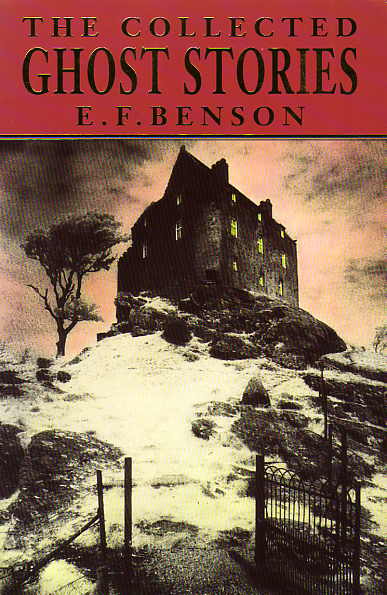
The cover of this fairly recent edition of E.F. Benson's collected ghost stories actually illustrates "The Hanging of Alfed Wadham"

The one thing about this story that is interesting is the glimpse into closeted gay life in the early twentieth century. Because make no mistake, this is a very gay story. Father Denys, the narrator, murderer Horace Kennion and his victim Gerald Selfe are implied to be closeted gay man, while wrongful execution victim turned vengeful ghost Alfred Wadham was a blackmailer who blackmailed men about their indiscretions. And yes, Gerald Selfe's sexual indiscretions are said to have been with a married woman, but I suspect Benson just added that tidbit to make the story more palatable in a world, where LGBTQ themes could only be hinted at.

Another thing that's notable is that this is a fairly rare example of a pulp story that's explicitly religious. Because contrary to what certain folks say, religion in general and Christianity in particular do not play a big role in pulp SFF and pulp fiction in general. Especially in pulp SFF, religion is either a scam or for aliens or it involves sacrificing nubile virgins to Cthulhu. Yes, there are exceptions such as Robert E. Howard's Solomon Kane, but they are few and far between.

And come to think of it, Solomon Kane, Howard's fanatical Puritan avenger and scourge of all that is evil, is a much more interesting and compelling portrait of an intensely religious person in moral distress, though in Kane's case is moral dilemma is that he is a violent man who kills a lot of people, believing himself to be on a mission from God. Only that both Kane's religious and moral  dilemma and his adventures are a lot more exciting and better written than "The Hanging of Alfred Wadham". This is particularly interesting since three Solomon Kane stories, "Red Shadows", "Skulls in the Stars" and "Rattle of Bones" had already been published by the time this story was published. So Weird Tales had already published much variations on the theme of "An intensely religious person is confronted by the supernatural and has their faith tested".

In fact, if you come across explicitly religious SFF from the 1930s and 1940s, it usually hails from Britain and was published outside the pulp magazine ecosystem. C.S. Lewis is probably the best known example, though E.F. Benson also fits the bill. Now I make no secret of the fact that I intensely dislike C.S. Lewis' fiction, but much as Lewis' religious blathering annoys me, there is no doubt that Lewis could write. E.F. Benson, at least based on this example, couldn't.

"The Hanging of Alfred Wadham" was my first exposure to E.F. Benson's work, but based on this story, I certainly won't go seeking out more of his work. In fact, I am baffled that Benson is famous enough to have a Wikipedia entry, plenty of reprints of his work and film and TV adaptations. Maybe his satirical small town tales are better or maybe this story is just a dud. It definitely is proof that even Weird Tales did publish duds on occasion, though they are still a lot more consistent than other pulp magazines.

If you want a Weird Tales story featuring an execution, read the much superior "In a Dead Man's Shoes" by Harold Markham. If you want a story about an intensely religious person having their faith and personal morality tested by encounters with the supernatural, read Robert E. Howard's Solomon Kane stories. If you want religious blathering but well written, read C.S. Lewis. If you want to read a great story from the August 1929 issue of Weird Tales, read "The Shadow Kingdom" by Robert E. Howard.

But don't bother with "The Hanging of Alfred Wadham", unless you are a fan of E.F. Benson's or really like religious blathering and theological arguments in your fiction or are doing a study of early LGBTQ speculative fiction.

Monday, 21 November 2022

Retro Review: "In a Dead Man's Shoes" by Harold Markham


Weird Tales April 1929 

"In a Dead Man's Shoes" is a historical short story by Harold Markham, which was first published in the April 1929 issue of Weird Tales. The story may be found online here.

I came across this story via the striking interior artwork (see below) of an eighteenth century hanging by prolific Weird Tales interior and cover artist Hugh Rankin under his pseudonym Doak (Doak was Rankin's middle name), which intrigued me enough to read the story itself. Rankin also supplied the striking Art Deco cover, illustrating a Seabury Quinn Jules de Grandin story, for this issue of Weird Tales, by the way.

Harold Markham is one of the many pulp era authors about whom we know next to nothing. ISFDB lists only six stories by him, published between 1928 and 1936. Three of those stories were published in British horror anthologies, which leads me to believe that Markham may have been British. The remaining three appeared in Weird Tales.

The Fiction Mags Index lists a few non-fiction pieces by Markham that appeared in Boys' Life and Boy's Own Paper. Several of these non-fiction articles are about amateur theatre and indeed Harold Markham published a manual for staging amateur theatre productions in 1931. There also is a Harold Markham who ran a coconut plantation in the Solomon Islands from the 1930s into the 1960s and was a prolific letter writer and diarist, though it's not clear whether he is the Harold Markham who wrote "In a Dead Man's Shoes".

Warning: There will be spoilers in the following.

"In a Dead Man's Shoes" opens with a bang or rather the slamming of a gavel, as a judge sentences a young man named Jim O'Dale to death for highway robbery. O'Dale is remarkably sanguine about his fate. He readily admits that he is guilty and even boasts of a particularly daring heist, where he robbed a fellow highwayman who had previously robbed the actor David Garrick. David Garrick was a real person, by the way, a famous eighteenth century actor and director of the Drury Lane Theatre.

O'Dale only has three requests for the judge. He asks for a reasonably sober hangman to avoid a botched execution, that a certain lady be allowed to visit him in prison and that his old friend, the innkeeper Jacob Larkyn, come to see him hanged. After all, Larkyn paid for O'Dale's lawyer, though the lawyer never stood a chance in the face of overwhelming evidence. "See ye again at Tyburn," O'Dale calls out to Larkyn in what turns out to be a very ominous statement.

Larkyn has every intention to watch O'Dale's execution, since he was the one who tipped off the authorities and led the Bow Street Runners to O'Dale's hideout. As for why Larkyn sold out his old friend, it's a classic case of "cherchez le femme", since both O'Dale and Larkyn happen to be in love with the same woman, Barbara Challis. However, Barbara chose the handsome O'Dale over the unattractive Larkyn, so Larkyn decided to get his rival out of the way and then console the bereaved Barbara. He even paid for O'Dale's lawyer, because he knew that the evidence against O'Dale was so overwhelming that even the best of lawyers could not save him.

Next, we get the execution of Jim O'Dale at Tyburn, described from Larkyn's POV in grisly detail. We get plenty of description of the jeering, cheering crowd and of the handsome Jim O'Dale being driven to the gallows, dressed in fine new clothes. This is historically accurate, by the way, since condemned prisoners about the be hung in Tyburn would often wear particularly nice clothes to look their best during their execution.

Even on the way to his own hanging, Jim O'Dale is still charming and suave as ever. He doesn't have a dying speech, though he does have a final request. He asks to speak to Jacob Larkyn and asks that his fine and very distinctive shoes with wrought gold buckles be given to Larkyn as a final gift. This is contrary to custom, since the hangman gets the clothes of the executed victims as a sort of bonus, though the resale value is questionable considering that people executed by hanging tend to lose control of their bowels and bladder. However, O'Dale tells the hangman that he can have all his other clothes, including a very fine velvet coat, as long as Larkyn gets the shoes "in memory of what he did for Jim O'Dale".

What makes the shoe request even more strange is that earlier on the same page, it was explained that part of the reason Larkyn hates Jim O'Dale is that O'Dale is handsome and has dainty hands and feet, whereas Larkyn has the big paws and feet of a labourer. So given the difference in their shoe sizes, how will O'Dale's shoes even fit Larkyn?

The hangman agrees to let Larkyn have the shoes and so the execution proper begins. Charming, handsome and debonair as Jim O'Dale was in life, his death is brutal and unpleasant and he struggles a lot, before the hangman tugs on his legs to break his neck, a scene illustrated by Hugh Rankin in the interior art.

Interior art for "In a Dead Man's Shoes" by Hugh Rankin a.k.a. Doak 

The description of the hanging and of Jim O'Dale's twitching, struggling body is not only quite graphic, it is also accurate compared to descriptions of actual short drop hangings. The only thing that is not entirely accurate is that O'Dale is the only person to be hanged that day, since in the eighteenth century multiple prisoners were usually hanged at once. In fact, the description of the hanging was so accurate that I wondered whether Harold Markham had ever witnessed an execution by hanging. This is not completely unlikely, since the last public hanging execution in the US took place in Kentucky in 1936, i.e. seven years after "In a Dead Man's Shoes" was published. The UK no longer had public executions in the twentieth century, but Markham might still have witnessed a hanging in a professional capacity (journalist, lawyer, priest, prison warden) of some kind.

However, twentieth century hangings were long drop hangings, at least in the US and the UK and its former and current colonies. Short drop hangings such as the executions at Tyburn and the resulting violent death struggles were long a thing of the past by the early twentieth century, at least for official executions. Therefore, it's also quite possible that Markham used lurid reports about executions at Tyburn from old broadsheets or the Newgate Calendar as the basis for the graphic description of the hanging of Jim O'Dale.

The hanging of Jim O'Dale is such an unpleasant sight that Larkyn feels a little ashamed for what he's done, especially since he is obliged to wait and watch his rival swinging dead in the wind for an hour, until the body is cut down. We get another nice bit of period detail, as spectators try to snag a piece of a hangman's rope, which was a popular good luck talisman during the era. The hangman also keeps his word and gives Larkyn the late Jim O'Dale's shoes.

A drink at a nearby pub lifts Larkyn's spirit and he even wonders that since parts of the hangman's rope are considered good luck charms, whether O'Dale's shoes will not bring him luck. So Larkyn decides to try on the nice new shoes and lo and behold, they even fit, though they are a little tight.

Now Larkyn goes to see Barbara Challis, hoping to console her in her grief over Jim O'Dale. Barbara, who did not attend the execution, has clearly been crying, but she's also oddly triumphant, as she tells Larkyn that O'Dale asked her to make sure that Larkyn is rewarded for everything he did for them. Again, this sounds rather ominous, but Larkyn is too besotted by the pretty Barbara to notice.

Barbara hugs Larkyn and cries on his shoulder and reveals yet another last wish of Jim O'Dale. For O'Dale did not want Barbara to mourn him, but wanted her to move on. He specifically asked her to go to the Drury Lane Theatre on the night of his hanging to distract herself by watching celebrated actor David Garrett play Hamlet. And since a lady can hardly go to the theatre alone, Barbara asks Larkyn to accompany her. After all, it was Jim O'Dale's last wish.

After the play, Barbara asks Larkyn to take her to the stage door to see the great David Garrett himself. There is a crowd at the stage door, but Larkyn pushed his way through to David Garrett himself and asks the actor to talk to Barbara. Though used to fan requests, Garrett is uncommonly interested in Larkyn and particularly in his shoes – the very distinctive shoes with the gold buckles that Jim O'Dale bequeathed to Larkyn as a final gift.

Turns out that the shoes really belong to David Garrett and were stolen, when Garrett fell victim to a highwayman, a highwayman who was subsequently robbed by Jim O'Dale. Larkyn tries to explain that he came by the shoes honestly, that Jim O'Dale gave them to him, but suddenly Barbara calls out that Larkyn has the shoes, because he was O'Dale's fence and that they will find plenty of more stolen goods hidden in Larkyn's closet.

Now Larkyn finally realises that he has been tricked, but it's too late. He is arrested and taken to Newgate. The story ends with Larkyn having a vision of his own trial and hanging, while Barbara looks on in triumph.

"In a Dead Man's Shoes" is a neat, atmospheric and well-constructed historical crime story. However, even though the story was published in Weird Tales, it is not even remotely supernatural. Larkyn does not fall victim to a vengeful ghost, but to the carefully plotted revenge of Jim O'Dale and Barbara.

This isn't as unusual as you'd think, since Weird Tales did publish quite a few stories in the 1920s that were heavy on torture and physical brutality, but had no supernatural content. "The Copper Bowl" by George Fielding Eliot, published in the December 1928 issue of Weird Tales and reprinted several times since then, is probably the best known example. Even before either genre was fully codified, the lines between horror and thriller were fluid and so stories of non-supernatural horror like "The Copper Bowl" or "In a Dead Man's Shoes" could find a home in Weird Tales.

"The Copper Bowl" hasn't aged well, since it's a yellow peril story and very racist. In fact, I'm stunned that the last reprint of that story was in 2017. Meanwhile, "In a Dead Man's Shoes" has never been reprinted, even though it's a well plotted revenge story and manages to be not grossly offensive.

Indeed, it is notable how well executed (pun fully intended) this story is. Markham never mentions an exact date beyond the reign of George III (which lasted a whopping sixty years), yet Markham weaves plenty of details into the story that evoke the second half of the eighteenth century. The story is also well researched. But then, there was quite a lot of good and well researched historical fiction to be found in the pulps, particularly in Adventure. Sadly, comparatively little of it has been reprinted.

Markham's keen interest in theatre, which is evidenced by the fact that he wrote several articles and a whole book on staging amateur theatre productions, comes through in the story with regard to the David Garrick subplot. Though I wonder whether Garrick was better remembered in the 1920s, since this story was the first I'd heard of him, though I know I inadvertently visited his grave in Poet's Corner in Westminster Abbey.

The revenge plot is well crafted, too, especially considering how short the story is (only seven pages). Many of the utterances of Jim O'Dale and Barbara seem friendly and pleasant on the surface, but take on an ominous double meaning upon rereading the story. Markham also drops in the clue that Jim O'Dale robbed the man who robbed David Garrick into the very first scene in the courtroom and thus sets up the pay-off.

A well-plotted historical crime tale that really deserves more attention than it got.

Monday, 19 October 2020

Retro Review: "Transparent Stuff" by Dorothy Quick

This cover illustration, the last one Unknown ever had, has nothing to do with "Transparent Stuff", but is for "But Without Horns" by Norvell Page.

I'm continuing my reviews of Dorothy Quick's Patchwork Quilt stories with "Transparent Stuff", the second story in the series, which appeared in the June 1940 issue of Unknown. The story may be read online here. You can also read Steve J. Wright's review of the story along with the rest of the issue here. This review will also be crossposted to Retro Science Fiction Reviews.

Warning: Spoilers beyond this point!

This time around, Dorothy Quick plunges us right into the story by having her protagonist Alice select another square of fabric of the enchanted patchwork quilt to take her into the past. For those who missed the first story, Alice accidentally came across a magical patchwork quilt owned by her aunt Annabel. Many years ago, a witch assembled the quilt from scraps of fabric with powerful and often terrifying memories attached to them. If someone falls asleep under the quilt while touching one of the squares, they will relive whatever memory is attached to the respective square in their dreams.

"Transparent Stuff" is clearly set some time after the previous story "Blue and Silver Brocade", for while Alice was terrified by her experience in the first story (to be fair, she did relive a black mass complete with bloody sacrifice and then found herself strangled to death), by now she has become almost addicted to the experiences the patchwork quilt can give her. Considering that the quilt has killed at least one person and driven another mad, this is very risky indeed.

The square Alice has chosen for her latest adventure is made of very sheer, nigh transparent linen, interwoven with golden and silver threads that form a floral pattern. And so, Alice falls asleep with her hand touching the square and suddenly finds herself clad in a gown made of the same transparent fabric and wearing elaborate jewellery. She manages to look at herself in a reflective surface and finds her own face looking back at her, though with very different make-up and hairstyle. So is Alice reliving the experiences of an ancestor this time or is reincarnation in play here?

Alice – and the reader – quickly learns that the body she is inhabiting belongs to a Babylonian princess named Star of Light. Star is the only child of King Mi-Bel of Babylon and she is about to be married off to a man of her father's choosing. There is a rundown of suitors, none of whom sound remotely promising. One is too old and Star’s cousin besides, another is a drunk and a womaniser and the third is rumoured to consort with demons and engage in black magic. Star is understandably none too thrilled about these marital prospects and so she decides to ask the goddess Ishtar for help, aided by a priest named Abeshu.

Abeshu takes Star to a secret sanctuary inside the great temple and summons the goddess. After some ritualising and incense burning, the goddess Ishtar appears and tells Star that she need not marry any of the suitors vying for her hand and that she may marry the one her heart desires. She also promises Star the gift of eternal love, but warns her that there will be a price.

Finally, Ishtar also grants Abeshu his wish, even though he never utters it out loud. When Star asks Abeshu what he wished for, he gives her an evasive answer, but also asks that Star make him her counsellor. Star agrees, but Alice is sceptical about Abeshu's motives, for she feels that the priest hates the young princess.

Next, Star and her lady-in-waiting Rima take a tour of the hanging gardens, one of the wonders of the ancient world, in Star's royal litter. Star's reverence for the beauty of the gardens is interrupted, when a young boy cries for help. Star signals the litter to stop and asks the captain of her guard to bring the boy to her.

The boy tells star that a man saved his mother's life, when she was nearly trampled by a horse. However, the horse was injured in the process and now a mob is about to lynch the helpful stranger for harming one of the horses of Khian, Prince of Egypt and one of Star's unwanted suitors. Star orders her guards to save the stranger. When Star lays eyes on the handsome stranger and his exposed muscular chest, it is love at first sight. Star is thrilled, for Ishtar has kept her word.

The stranger turns out to be an Egyptian mercenary named Belzar who was in service to Prince Khian, but quit, because he disliked the Prince. Star promptly engages his services and as she chats with her new guardsman, Belzar confesses that he loves her. Star responds that she loves him, too, and that it's all Ishtar's will. Of course, this is also a very convenient excuse for what romance readers call insta-love. However, a novelette doesn't offer much space to slowly develop a romantic relationship, so divinely ordained insta-love is a handy shortcut.

Meanwhile, Alice remembers that Ishtar promised Star eternal love and since Alice is Star's reincarnation and/or descendant, she wonders when she will find a Belzar of her own.

But Belzar also has bad news for Star, because Prince Khian is planning to abduct the princess and thus bypass the other suitors. Belzar, Star and the guard captain inform the King, who plans to set a trap for the kidnappers and hides his own guards and Belzar behind the draperies in Star's chambers. Nonetheless, one of the kidnappers manages to throw a bag over Star and carry her off. But Belzar stops him with a dagger to the eye and rescues Star who is now even more in love with him than before. They kiss, but are quickly interrupted by the other guards.

However, King Mi-Bel still has other plans for his only daughter. Now that the plot of the treacherous Prince Khian has been exposed, Mi-Bel plans to wed Star to her much older cousin Ditmah. The betrothal will be announced at a great feast to be held that very evening, as Star learns from the duplicitous Abeshu. However, Abeshu has a plan to bring Star and Belzar together after all.

At the feast, Abeshu fills the King up with wine to make him more mellow. Belzar, who has been granted noble status as a thank you for saving Star from the kidnappers, is there as well. Just as the King is about to announce who will marry his daughter, Star stands up and begs the king to grant her to choose her own husband. She also asks that she and her chosen husband be allowed to live in a small palace near the temple of Ishtar. King Mi-Bel, who is well and truly drunk by now, grants her both wishes. So Star names Belzar as her chosen husband.

Mi-Bel is not at all pleased by Star's choice, for what about all the carefully plotted political alliances that Star has just upset? So he asks Abeshu how to undo this match. This is the moment that the duplicitous Abeshu has been waiting for. He whispers his poisonous advice to the King.

The King now announces that Star shall wed Belzar and that she shall have a wedding feast befitting a princess. She and Belzar will also be allowed to dwell in the palace near the temple of Ishtar, just as Star desired. However, they will be immured inside a chamber in this palace, to be buried alive for all eternity, while cousin Ditmah becomes king of Babylon.

Belzar is surprisingly resigned to his fate – after all, the goddess Ishtar said that there would be a price, but she also promised them eternal love for all time. Star, meanwhile, confronts Abeshu about his treachery. Abeshu tells Star that she is the traitor, for she placed her own desires over her duty to Babylon, because women wanted to choose their own partners with no regard for political alliances – well, next they’ll be demanding the vote, too. And besides, Ditmah no more wanted to marry Star than Star wanted to marry him. Instead, he is in love with Abeshu's niece and now she will mount the throne instead of Star. But Abeshu apparently has second thoughts about the awful fate to which he condemned the lovers, so he gives Belzar two lockets filled with a poison that will grant him and Star a painless death.

After a weeklong wedding feast, Abeshu escorts Star and Belzar to a small niche inside the palace where they will be immured. They both take the poison and once more proclaim their undying love for each other. Before the last stone is in place and the effect of the poison kicks in, the voice of Ishtar appears, telling Star and Belzar that she will remain true to her promise and that their love shall last forever.

Alice awakens, not at all troubled that she just died for love… again. Because the goddess Ishtar promised Star and Belzar that their love shall last forever. And if Alice is the reincarnation of Star, that means that the reincarnation of Belzar is waiting for her somewhere out there. Will she find him? Maybe we'll find out in the third Patchwork Quilt story.

Sadly, this collection of novelettes eligible for the 1941 Retro Hugos is the only time "Transparent Stuff" has ever been reprinted.

While the first Patchwork Quilt story "Blue and Silver Brocade" mixed historical fiction with gothic horror and some surprisingly lurid violence, "Transparent Stuff" is more subdued – no black masses and graphic strangulation scenes – but the central love story is no less tragic and once again the lovers can only be united in death and beyond. The Patchwork Quilt stories are undoubtedly romance, but not romance in the modern sense, where a happy ending is required.

The downer ending of the forbidden lovers entombed together reminded me very much of Aida by Guiseppe Verdi, which is set in ancient Egypt rather than ancient Babylon, but ends in the same way, with the titular character, an Ethiopian princess turned Egyptian slave, and her lover, Egyptian general Radames, sentenced to be entombed together, because Radames betrayed his country for Aida. Considering how popular and frequently performed Aida is, it is very likely that Dorothy Quick was familiar with the opera. She also did have a thing for immurement – after all, her 1944 short story "The Gothic Window" features an immured sorcerer haunting a window (or does he?).

I've been an opera fan since I was a teenager, an age when most people listen only to pop music. Not that I didn't listen to and enjoy pop music – I did and still do. However, I also loved operas and operettas, because they combined two things I loved, stories and music. And yes, I adored the melodramatic plots of operas, the more melodramatic the better. Concert performances of operas baffle me, because they omit all the fun stuff. And if I want to listen only to the music, I can do so at home.

Aida was always one of my favourite operas. When I was a teen, my Great-Aunt Metel, upon learning that I liked opera, gave me all the opera stuff that my Great-Uncle Rudy, another opera fan who sadly died before I was born (a pity, because I'm sure we would have gotten along just splendidly, since we both loved Italian opera), had left behind. That opera stuff included not just full orchestral scores of various operas, but also the libretti. And one of those libretti was Aida, which I loved so much that I even organised a spoken word puppet show (because though I had the orchestral score thanks to Uncle Rudy, I couldn't recreate it on a single piano) for friends and family. And yes, that downer ending was tragic, though most operas ended with everybody dying for love, which my teen self thought was so romantic. So my reaction to the Patchwork Quilt stories is basically, "Wow, these stories very much channel everything my teenaged self loved", which is unusual in itself, because I certainly wasn't your average teenager. First we had Angelique, whose adventures I devoured, and now Aida.

All three Dorothy Quick stories I reviewed for the Retro Review project had female protagonists and POV-characters, which is rare in golden age speculative fiction. All three stories also pass the Bechdel test – though "Transparent Stuff" only passes it due to a quick conversation between Star and her lady-in-waiting Rima about the hanging gardens – which is even rarer.

Another thing I find notable about Dorothy's Quick's stories is that their protagonists are all women who know what they want in life, romantically and otherwise, and are not afraid to go after it, even if this doesn't always end happily for them. Star wants to marry for love and not politics and gets her wish, even if it ends with her death. Francoise from "Blue and Silver Brocade" is willing to do literally anything to keep the attention of King Louis XIV of France and the influence it brings and her friend/companion Jeanne is willing to do anything to protect her. Anne from "The Gothic Window" arranges a weekend getaway in a house that may or may not be haunted in order to persuade her own boyfriend to propose, to fix up two friends with each other and protect another friend from her abusive and cheating husband. Unlike Star, Francoise and Jeanne, she even succeeds and does not die either. And finally, Alice, the protagonist of the framing stories linking the Patchwork Quilt tales, decides to explore the experiences the quilt can give her, even against all warnings.

The first Patchwork Quilt story, "Blue and Silver Brocade", has only one named male character, Raoul, doomed lover/killer of the equally doomed Jeanne whose life and death Alice gets to relive. "Transparent Stuff" has more named male characters, but nonetheless it's still a very woman-centric story. Star's three unwanted suitors remain cyphers. Cousin Ditmah is the only one who actually appears on the page in a brief cameo. Prince Khian stages a kidnap attempt, but otherwise remains off stage. As for the third suitor, I can't even remember his name – all I remember is that he is rumoured to be involved in black magic. Star's father King Mi-Bel gets more screen time, but he also remains vague and indeed, Star notes at one point that her relationship to her father isn't close, since she barely sees him. And of course, Mi-Bel is a hot candidate for the 1940 Retro Darth Vader Parenthood Award for Exceptionally Horrible Fictional Parents.

Of all the male characters in "Transparent Stuff", the one who is the most fleshed out is the villainous priest Abeshu. He is also more complex than the average pulp villain, since his motivation is understandable. In many ways, Abeshu is a more sympathetic character than Mi-Bel who is just plain awful.

What's interesting is that Belzar, Star's one true love for all time, is not particularly fleshed out either. His role in the story is basically generic love interest/hero. Come to think of it, the love interests in the other Dorothy Quick stories I've read were mostly generic hero types as well. In fact, it's fascinating how woman-centric Dorothy Quick's stories are, for Quick completely reverses the common pattern of pulp era SFF. Instead of having several at least reasonably fleshed out male characters, while the women are generic love interests or equally generic femme fatales/villainesses, Dorothy Quick features more complex female characters and generic men.

Dorothy Quick is the sort of writer who likes to delve into details and describes clothing, buildings, interiors, etc… And her description of ancient Babylon impressed me with how fairly closely it matches what we know of ancient Babylon today, especially considering how bad Unknown was about historical accuracy otherwise. True, Quick is vague in her description of the hanging gardens, but then we still have no idea what they actually looked like in bloom. So I dug a bit into the exploration history of Babylon and found that the archaeological exploration of Babylon began in the early nineteenth century. Of particular note is the German team of archaeologist Robert Koldewey and orientalist Eduard Sachau, who started their excavations in Babylon in 1897 and found among other things what remains of the hanging gardens as well as the spectacular Ishtar Gate with its blue glazed tiles. The reconstructed Ishtar Gate may be seen in the Pergamon Museum in Berlin (and I recommend that everybody who visits Berlin go and see it, because it's very impressive). The reconstruction was finished in 1930, i.e. ten years before "Transparent Stuff" was published. Again, it is likely that Dorothy Quick was familiar with Koldewey and Sachau's work and the Ishtar Gate and incorporated this knowledge into her story.

Though this is only the second of three Patchwork Quilt stories, the central gimmick of an enchanted quilt which can make those who sleep under it relive the past is already well established by now, so well that Dorothy Quick introduces a new element in the form of reincarnation and fated soulmates. It's a great way to maintain interest in the series. After all, the readers wants to know when/if Alice will find her own fated soulmate, the reincarnation of Belzar. This reader at any rate wants to know. Considering that Unknown seems to have been aimed mainly at the same nerdy young men as its sister magazine Astounding, as Steve J. Wright notes here, I'm not so sure about other readers. And it is notable that the Patchwork Quilt series had only three instalments, the last of which appeared in December 1940, even though Unknown would continue until 1943. So did Campbell drive away Dorothy Quick like he drove away so many other talented writers over the years?

I don't know, but I'm definitely looking forward to reading the last Patchwork Quilt story. Next to Fafhrd and Gray Mouser, this is definitely the best series to come out of Unknown. A pity that it has never been reprinted.

Wednesday, 19 February 2020

Retro Review: "The Gothic Window" by Dorothy Quick


"The Gothic Window" is a short story by Dorothy Quick, which was first published in the May 1944 issue of Weird Tales and is therefore eligible for the 1945 Retro Hugos. The story may be found online here.

Warning: There will be spoilers in the following.

"The Gothic Window" starts off, like so many horror stories and murder mysteries, with four couples or prospective couples spending a rainy weekend at a secluded country mansion. Anne, the protagonist and POV character, has arranged the house party to further her romance with Sheridan "Sherry" Crawford and to fix up her friends Bob and Nancy. However, another friend of Anne's, Claire Rowley, throws a spanner into the works, when she invites herself and her husband Jim along. Anne isn't happy about this, for not only does Jim cheat at bridge, he's also a cad and potential abuser and Claire is clearly afraid of her husband. To make matters even more complicated, Nancy is infatuated with Jim, which endangers her budding romance with Bob. And though Jim is married to Claire, he pursues Nancy as well. There is another couple as well, Lou and Gib Silvers, who are not involved in the romantic polygon developing at the country manor and are only there, because bridge requires four players in two pairs, so they need eight people.

During yet another round of bridge, Jim suddenly becomes fascinated by a stained glass gothic window that doesn't match any of the other windows in the house. He says that the window makes it difficult for him to concentrate, whereupon Anne offers to tell the story behind the window.

Anne explains that she first saw window during the requisite grand tour of Europe with her parents. Anne and her family stayed at a monastery in Spain, where they admired the gothic architecture and the beautiful stained glass windows. All of the windows are regularly opened except for one. And when Anne or her parents ask about that window, the normally so jolly monks fall silent.

One day, when Anne and her mother are walking along the cloister, they notice that the always closed window stands wide open and that a monk is lying on the floor in front of the window. Initially Anne and her mother assume that the monk is just unconscious, but upon closer examination, he turns out to be dead, an expression of unearthly bliss frozen on his face.

Now the monks finally do spill the beans about what is going on. For when the monastery was first built, a man was immured alive in its walls according to medieval custom. The unfortunate fellow had been sentenced to death for sorcery. Soon after he was immured, he started to haunt the monastery and who can blame him? The focus point of the hauntings was the window closest to the spot where he had been immured.

Soon mysterious accidents began to happen near the window. Furthermore, the monks discovered that passing through the window gave them wonderful visions. By now we realise that this particular window appears to be a French window, which also doubles as a door. Never mind that this makes no sense, because there were no French windows during gothic times. Nor can gothic windows be opened – they are fixed.

Because the visions bestowed by the window were so amazing, the monks kept passing through it, until one by one they were found dead, an expression of unearthly bliss frozen onto their faces.

The abbot did everything he could to keep the monks from using the window, but the monks kept findings ways around his measures and they kept dying. So in the end, the abbot walked through the window himself and promptly died, only that the expression on his face was not one of bliss, but of unbelievable horror.

You're think that this story, plus the physical evidence in the form of a dead monk lying on the ground in front of the window, would be enough to warn anybody with any shred of sense to keep the hell away from the haunted window. However, Anne's mother apparently does not possess a shred of sense and so she offers to buy the window from the monks who are only too glad to be rid of it. They also kindly offer to exorcise the window, before it is shipped to its new home.

Once the window has been installed in the house, strange accidents start to happen there as well. Anne sprains her ankle, her mother breaks her arm and her father breaks his leg, all after passing through the window. So Anne's family locks the window, but they stupidly leave the key in the lock and so it eventually kills a friend of the family. A sudden heart attack, the doctor says, but Anne and her family know better and finally keep the bloody window locked, though they still don't have enough sense to just tear it out.

After Anne has told her story, everybody gradually retires to their rooms, while the romantic drama continues. Claire confesses to Anne that Jim abuses her, that she knows he is stalking Nancy and that she is afraid of her husband, but that she cannot leave him, because Jim knows certain dark secrets about her. Nancy chances to overhear all this and confesses that she is terrified of Jim, too, but also feels inexorably drawn to him and there is absolutely nothing she can do about it.

Once Nancy and Claire have finally gone to bed, Sheridan finally proposes to Anne and they discuss their future life together until the wee hours. When they finally retire – to separate rooms, of course – they once more pass the haunted window and Anne realises that the key is still in the lock.

"But I thought you said that your father kept it in his desk," Sheridan points out, whereupon Anne confesses that she made the whole story up to interrupt the bridge game and keep Jim away from Nancy. Anne's mother really did buy the window in Spain, that much is true, but everything else was pure fiction.

Sheridan praises Anne's imagination, but he also worries about the psychological effects of Anne's tale. After all, what if one of the guests accidentally hurts themselves near the window? So Anne promises that she will clear up the whole ruse in the morning. But it never comes to that, for the next morning they find Jim Rowley dead in front of the open window, his face a mix of horror and bliss.

"The Gothic Window" is yet another example of the tale within a tale, usually told in appropriately spooky surroundings, that was very common in Weird Tales. "The Man Who Wouldn't Hang" by Stanton A. Coblentz from the same year is another example of the type.

Nonetheless, "The Gothic Window" isn't a typical Weird Tales horror story. In many ways, it is reminiscent of the gothic romance genre that was only just beginning to take off with the great success of Daphne du Maurier's Rebecca six year prior. All the elements of the gothic romance are here. We have the secluded country house, we have the Byronic hero who may or may not want to harm the heroine, we have the innocent ingenue he is pursuing, we have the good guy love interest and we have a malicious ghost, seeking revenge for an evil done to him centuries ago.

The romantic entanglements at the house are quite complicated and it took me some effort to remember who was in love with whom, who was married to whom and who was cheating on whom. The fact that all the characters have bland, if period appropriate names like Anne, Nancy, Claire, Bob and Jim doesn't help either. There also are more characters in the story than are necessary. Okay, so the number of bridge players must be dividable by four, but isn't there anything else they could have done over the weekend rather than play bridge?

That said, even if "The Gothic Window" has more characters than are strictly necessary, it is also the story with the highest number of named female characters, four in all, I have reviewed so far. Furthermore, "The Gothic Window" is also one of only two stories I have reviewed for the Retro Reviews project so far which passes the Bechdel test, the other being Ray Bradbury's "Undersea Guardians". Finally, "The Gothic Window" is also one of only two stories with a female POV character, the other being once again "Undersea Guardians".

As soon as Anne tells the story about the murderous haunted window, it's pretty obvious that someone will succumb to its spell and that that someone will be Jim, the villain of the piece. Nonetheless, Dorothy Quick did manage to surprise me, when Anne confessed that the entire story of the haunted window was fake. Coincidentally, this also explains why neither the monks nor Anne and her family ever did the sensible thing and just tore out the window and/or smashed it.

Anne's revelation also casts some doubt on whether "The Gothic Window" really is SFF. After all, there is no malicious ghost of an executed sorcerer haunting the window – Anne just made the whole story up. As for what killed Jim, that was most likely the power of psychological suggestion rather than a vengeful ghost.

There is some historical evidence that humans were immured as a method of execution throughout history and occasionally, the remains of immured humans have been found. There are also plenty of legends about people – often young women or children – being immured in the walls of new buildings as a sacrifice found all over Europe. On the Balkan, there is a legend about a young bride being immured. And in Theodor Storm's famous novella Der Schimmelreiter (The Rider on the White Horse, 1888), protagonist Hauke Haien not only has some unacceptably modern ideas about flood protection and the proper way to build dykes, he also refuses to immure a living being (a dog in this case, because there is no child handy) into the new dyke. As a result, the superstitious locals believe the dyke to be cursed and when it breaks during a particularly vicious winter storm, Hauke's wife and daughter drown and Hauke sacrifices himself to save the village. Come to think of it, The Rider on the White Horse would not have felt out of place in an issue of Weird Tales.

There is no concrete evidence that human beings were ever immured as sacrifices during the Middle Ages or in modern times in Europe, but there is plenty of evidence of animals being immured or buried inside old buildings and yes, dykes. In the 1960s, my parents and some of their friends restored a 17th century farmhouse as a weekend getaway. During the restoration work, they found the remains of an animal, probably a cat or dog, buried under the threshold. A historian carted the remains away and told them it was a building sacrifice and an important find.

I have no idea if Dorothy Quick has ever read The Rider on the White Horse, though it's not impossible, since the novella was first translated into English in 1914. And she was certainly familiar with the various legends about people immured as sacrifices. Though the choice of Spain as the origin of the haunted window is a bit strange, since Spain is one of the places in Europe, which does not have such legends.

Dorothy Quick is another woman SFF author who was clearly popular in her time, but is nearly forgotten these days. She published a science fiction novel entitled Strange Awakening in 1938, though she mainly seems to have specialised in horror fiction. She published twenty-three stories and twenty-seven poems between 1932 and 1954, mostly in Weird Tales, but also in Unknown, Oriental Stories, Strange Stories and Fantastic Adventures. Dorothy Quick was clearly popular and even contributed the cover story to the March 1937 issue of Weird Tales, illustrated by one of Margaret Brundage's striking covers.


However, Dorothy Quick rapidly fell into obscurity. As with her fellow Weird Tales contributor Allison V. Harding, very little of her work has ever been reprinted. Nowadays, she is remembered not so much for her writing but for striking up a friendship with Samuel Clements a.k.a. Mark Twain in 1907, when Quick was eleven and Twain was seventy-two and both were passengers aboard the SS Minnetonka. Dorothy Quick frequently talked about her youthful friendship with Mark Twain, who encouraged her to write, and even penned a memoir entitled Mark Twain and Me.

The only place where I found some biographical information about Dorothy Quick was Sisters of Tomorrow – The First Women of Science Fiction, edited by Lisa Yaszek and Patrick B. Sharp, which reprints Dorothy Quick's 1937 story "Strange Orchids". In their introduction to the story, Yaszek and Sharp note that Dorothy Quick was strongly influenced by domestic fiction and the gothic romance and that her stories frequently have female POV characters at a time when this was exceedingly rare in SFF. These observations certainly fit "The Gothic Window".


Mark Twin and Dorothy Quick in 1907

"The Gothic Window" is well written and Dorothy Quick was clearly a talented writer, but then she did impress the great Mark Twain himself as a precocious girl of eleven. The question is why has she been almost completely forgotten in spite of a twenty-two year career of writing SFF. Is it because her brand of domestic gothics fell out of fashion? But then, Dorothy Quick's work wasn't even reprinted when the domestic gothic romance was at the height of its popularity in the 1960s. Is it because Weird Tales is mainly associated with Lovecraftian horror and sword and sorcery these days, even though the magazine's bread and butter were far more traditional tales of gothic horror as well as proto urban fantasy?

Nonetheless, it is notable that even though Weird Tales was clearly a good market for women (the May 1944 issue alone contains stories by three women writers and both the cover artist and the editor were female as well), the male authors who penned more traditional horror stories for the magazine, writers like Seabury Quinn, Robert Bloch and Manly Wade Wellman, are still much better remembered than their female counterparts like Dorothy Quick, Allison V. Harding, Greye La Spina, Alice-Mary Schnirring or Mary Elizabeth Counselman, who penned "The Three Marked Pennies", one of the most popular stories in Weird Tales history and kept writing and publishing horror right up to her death in 1995.

An effective gothic horror story by an unjustly forgotten woman writer of the golden age. Well worth checking out.

Monday, 20 January 2020

Retro Review: "The Man Who Wouldn't Hang" by Stanton A. Coblentz


"The Man Who Wouldn't Hang" is a short story by Stanton A. Coblentz, which was first published in the July 1944 issue of Weird Tales and is therefore eligible for the 1945 Retro Hugos. The story may be found online here.

Warning: There will be spoilers in the following.

This story takes the form of a tale told around the fireplace. One night, man called Carrigan, who's worked as a state executioner for thirty years, is hanging out with friends and telling stories about his work. The fact that Carrigan is so open about what he does for a living is remarkable, considering that most real life executioners rarely talk about their work (executioners also have a high rate of depression and suicide), though there are exceptions who like to give interviews or write memoirs. And considering that executioners were historically shunned and often had to live outside the city gate, it's also remarkable that Carrigan even has friends, even if those friends mainly seem to be interested in the macabre stories Carrigan has to tell.

Carrigan is quite unapologetic about his line of work. And so when one of his friends, the first person narrator of this story, asks him if there was ever a prisoner who got away, Carrigan tells the story of a convicted bank robber and murderer he calls Scar-Face because the man had a distinctive scar on his face.

Throughout his trial, Scar-Face insists that he is innocent and did not fire the shot that killed a bank clerk, but it is to no avail. He is sentenced to death anyway. On death row, Scar-Face is remarkably cool and sanguine, even as his execution date draws near.

On the way to the gallows, Scar-Face is polite and cheery and even helps his executioners to blindfold him. Meanwhile, Carrigan is overcome by a spooky feeling. And though Carrigan has zero moral qualms about executing people and even brags that he has already hanged fifty men, he is uncommonly reluctant to pull the lever. When Carrigan finally pulls the lever after all, what happens is… nothing. The trap door does not open and Scar-Face does not hang.

Carrigan pulls the lever again and again, but the trap door just won't open. So Carrigan and his assistants check the gallows and everything seems to be in order. Even the trap door opens as intended, when Scar-Face is not standing on it. But as soon as they return the condemned to the gallows, the trap door once more refuses to open. At one point, Carrigan even has his assistants try the gallows on himself, with the rope tied around his waist rather than his neck. The trap door opens. So Scar-Face is brought back to the gallows and once again nothing happens.

Eventually, Carrigan and his assistants give up. Scar-Face is returned to his cell and Carrigan has to explain to the state governor why the execution could not be carried out. The governor is furious and threatens to fire Carrigan, but eventually relents, since there are plenty of witnesses to confirm that the failed execution wasn't Carrigan's fault.

And so a new execution date is set and a new gallows is built. The governor even shows up in person to witness the execution. Scar-Face is taken to the gallows and once more nothing happens. The trap door refuses to open and a thorough examination of the gallows finds no technical fault. Exasperated, the governor finally gives up and commutes Scar-Face's sentence to life imprisonment. Of course, this would never have happened in reality, at least not in the US, where executioners try again and again, if the first execution attempt fails. And yes, there are several examples.

Carrigan concludes his tale by reporting that a few years later, a member of Scar-Face's old gang made a death bed confession and admitted that he shot the bank clerk. So Scar-Face was innocent after all and is promptly freed. When his friends ask Carrigan about his theories why Scar-Face couldn't be hanged, Carrigan admits that during the final execution attempt, he saw a strange mist in the gallows chamber, a mist which coalesced into a pair of hands that held the trap door shut.

I have to admit that I chose this story at random, while (virtually) flipping through the July 1944 issue of Weird Tales. What attracted me was the title and the evocative interior art by A.R. Tilburne. Besides, the story is very short – only four pages long – and so I decided to read it.

I wrote in my review of "Guard in the Dark" by Allison V. Harding that her stories were often dismissed as forgettable fillers in later years. I felt that was too harsh a verdict for "Guard in the Dark". "The Man Who Wouldn't Hang", on the other hand, really is a filler. The story is well written – the general writing quality in Weird Tales seems higher under Dorothy McIlwraith than during Farnworth Wright's tenure – and effective, but it is also very slight. There isn't any deeper meaning nor does the story offer any opinion on the death penalty one way or another. "The Man Who Wouldn't Hang" is merely a spooky anecdote. There also is very little supernatural content in this story apart from the mysterious misty hands. "The Man Who Wouldn't Hang" could have been published just as well in the likes of Black Mask or Dime Mystery or any other crime pulp.

The fact that the story is well written is no surprise, as author Stanton A Coblentz was a veteran pulp writer who had started publishing in the 1920s and kept writing well into the 1960s. He was a frequent contributor to Amazing Stories and the other Hugo Gernsback magazines. "The Man Who Wouldn't Hang" is somewhat atypical for Coblentz, since most of his work seems to have been science fiction, quite a lot of it satirical. In addition to writing speculative fiction, Coblentz also was a poet and literary critic.

"The Man Who Wouldn't Hang" is very likely based on a real case, that of John "Babbacombe" Lee, who was sentenced to death for the murder of his employer in England in 1885 and survived three attempts to hang him, when the trap door would not open. As in "The Man Who Wouldn't Hang", the gallows functioned perfectly fine, when tested. Like the fictional Scar-Face, John "Babbacombe" Lee had his sentence first commuted to life imprisonment and was eventually freed. Though John "Babbacombe" Lee was not saved by supernatural intervention. Instead, the most likely explanation for the failure to hang him is that the gallows had been disassembled and set up in a different part of the prison prior to Lee's execution. In the process, the trap door mechanism had become misaligned and the trap door refused to open. An alternate explanation is that a prisoner tasked with setting up the gallows in its new location had deliberately sabotaged the mechanism. But whatever the reason, John "Babbacombe" Lee survived his execution by sixty years.

The case of John "Babbacombe" Lee is fairly well known and was also described in detail in the memoirs of James Berry, the executioner who was supposed to hang him. Coblentz likely stumbled over this story at some point and fictionalised it.

A neat spooky anecdote, lots of atmosphere, but little substance.

Friday, 10 January 2020

Retro Review: "The Wedge" a.k.a. "The Traders" by Isaac Asimov


"The Wedge" is a short story by Isaac Asimov, which was first published in the October 1944 issue of Astounding Science Fiction and is therefore eligible for the 1945 Retro Hugos. The magazine version may be found online here. Most readers will probably know the story under its alternate title "The Traders", which is how it appeared in Foundation, the first book of the eponymous trilogy.

Since "The Wedge" is one of the stories that make up the Foundation trilogy, perhaps a recap is in order, though Asimov, whose 100th birthday we are currently celebrating by remembering his accomplishments and personal faults, never gives us one, neither in the magazine nor in the book version. Still, for anyone who needs a reminder, here is the story so far:

Warning: Spoilers!

The Foundation started out as a group of scientists sent to the planet Terminus on the galactic periphery to compile an encyclopaedia and preserve knowledge at a time when the Galactic Empire was falling apart. However, the true purpose of the Foundation, revealed by psychohistorian Hari Seldon or rather his hologram, is to guide humanity through the dark age following the fall of the Galactic Empire, to reduce the length of that dark age from thirty thousand to a mere thousand years and to establish a second Galactic Empire, all following Seldon's master plan.

Alas, the Foundation is still just a group of encyclopaedists on a small and poor planet, surrounded by aggressive neighbours who have declared themselves independent from the Empire. However, Terminus has atomic power (Asimov's word choice) and its neighbours do not. And so Salvor Hardin, mayor of Terminus, creates an artificial religion called Scientism to bring and keep the neighbouring four kingdoms under the control of the Foundation.


All this happened in the first two stories of what would eventually become the Foundation series, published in Astounding some two years prior in 1942. "The Wedge" is chronologically the third and by publication order the fourth Foundation story. It is set some fifty years after the previous story "Bridle and Saddle". The four kingdoms are now fully under Foundation control thanks to the fake religion, but other planets have caught on to what the Foundation is doing and understandably want nothing to do with them. So the Foundation tries to spread its influence via traders who peddle atomic powered gadgets along the galactic periphery.

One of these traders of Limmar Ponyets (named Lathan Devers in the magazine version, but I will stick with the name most readers will be familiar with in this review) who has a hold full of unsold wares and problems making his quota. A call reaches him in the shower (literally) and a ship pulls alongside to deliver an important message that self-destructs upon reading – twenty-two years before Mission Impossible.

A trader named Eskel Gorov has been arrested on the planet Askone for attempting to sell atomic gadgets there, even though Askone has banned all Foundation traders and gadgets, because using atomic power is against their religious beliefs. Gorov is facing the death penalty for sacrilege and Ponyets is supposed to get him out. An additional complication is that Gorov is not a trader at all, but an agent of the Foundation whose mission it is to introduce atomic powered gadgets to Askone to soften up the local government to Foundation control.

Ponyets has a quite interesting backstory. It is implied that he was not born on Terminus, but in the four kingdoms and initially trained as a priest (and indeed a later story explains that most traders actually hail from the four kingdoms). But representatives of the Foundation recognised his intelligence and brought him to Terminus to be educated there. So, unlike most citizens of Terminus, Ponyets is actually familiar with the scripture and rituals of the Foundation's fake religion. This knowledge will come in handy on his mission.

Fake religions, which are science in disguise, were a popular trope during the so-called golden age of science fiction. And since fake religion stories predominantly appeared in Astounding, I suspect this was one of Campbell's pet subjects which he foisted on his writers. The early Foundation stories are probably the best known examples of this trope, but the 1944 Retro Hugo finalist Gather, Darkness by Fritz Leiber is another science as religion story and a most excellent one, too. Now Fritz Leiber actually did train as an Episcopalian priest and left, because he did not feel the vocation, even though the church wanted to keep him. These experiences influenced Gather, Darkness and Leiber's hilarious 1959 story "Lean Times in Lankhmar". And in fact I wonder if Leiber, whom Asimov must have known, wasn't an inspiration for Limmar Ponyets, the failed priest turned Foundation trader.

On Askone, Ponyets meets with the local elders who imply that Gorov may be released, if Ponyets is willing to pay for his freedom. However, the Askonians have no interest in Ponyets' wares. Instead, they want gold.

Ponyets has no gold – the Foundation had no particular interest in precious metals for their own sake. However, he uses his superior scientific knowledge to rig up a matter transmutator to turn iron into gold, which he demonstrates to the Askonian elders with great theatrical flair. The Askonians may hate atomic power and science in general, but they really love gold, so they are willing to turn a blind eye to where it came from.

Ponyets also exploits tensions inside the council of elders by setting up a private meeting with an ambitious council member named Pherl. Ponyets offers to sell the transmutator to Pherl, so he will have enough gold to finance his rise to power. Pherl knows that the religious taboos of his world are just superstition "for the masses", but he has to pretend to adhere to them to avoid the gas chamber. Ponyets assures him that no one need ever know that he has the transmutator.

Pherl finally agrees. He purchases the transmutator and Gorov is freed. However, Ponyets has tricked Pherl and installed a camera in the transmutator. He then proceeds to blackmail Pherl by threatening to broadcast footage of Pherl using forbidden technology to the superstitious masses of Askone. This would mean certain death for Pherl, so he is forced to purchase Ponyets' entire inventory. And so Ponyets not only makes his quota, but has also fulfilled both Gorov's mission and his own by installing a Foundation friendly leader on Askone.


I first read the Foundation series as a teenager and was blown away by the sheer scale, the twists particularly in the later volumes and also by how the Foundation usually triumphs by using brain over brawn.

My memories of "The Wedge" were vague – I mainly remembered it as "the one with the gas chamber", because several characters are threatened with execution by gas chamber, which disturbed my younger self a lot. Upon rereading, the gas chamber references are not nearly as prominent as I remembered. It also turned out that a vivid scene of Gorov being taken to the gas chamber, only seconds from execution, only existed in my mind. This occasionally happens for me with stories I first read as a teen – scenes I remember very clearly don't exist, because my vivid imagination supplies the details.

As I reread the story, I also remembered Ponyets' transmutation parlour trick and how much it impressed my younger self. Because I'd learned in chemistry class that it was indeed possible to turn mercury or lead into gold, but that it took a whole lot of power and the resulting gold was unfortunately radioactive (the Foundation has solved the latter problem, but not the former). In fact, radioactive gold was first synthesized from mercury in 1941 in an experiment that Asimov as a graduate student of chemistry would have been familiar with and that may well have inspired this story. The Foundation series is often called hard science fiction, largely because the stories originally appeared in Astounding, even though there is very little in the way of hard science in the series. The transmutation parlour trick in "The Wedge" is probably as close as the Foundation stories come to actual hard science fiction. And my younger self was very pleased to see something I'd heard about in chemistry class pop up in a science fiction story (so pleased that I even told my chemistry teacher about it) and used in such a clever way to trick a bunch of idiots.

The cleverness that pleased my teen self so much is still evident in the story when I reread it as an adult, because Limmar Ponyets is a very clever man who comes up with a very clever scheme to trick the Askonians. There is just one problem. Ponyets may be clever, but he's also an arsehole and even admits it. After all, he quotes a saying attributed to Salvor Hardin, mayor of Terminus and hero of the first two Foundation stories, "Never let a sense of morals prevent you from doing what is right."

It's a great line, which also serves as the epigraph of the magazine version of the story. But is what Ponyets and the Foundation are doing truly right? My teen self would probably have said yes. After all, the Foundation are the good guys here. They are trying to preserve civilisation and stave off the dark ages, even if I'd have preferred it is the ultimate aim of the Foundation was the creation of a Galactic Republic or Federation rather than an Empire. Still, if the Foundation has to use subterfuge and dirty tricks to fulfil that purpose, then so be it. Never mind that it is hard to feel sorry for the Askonians, because at least the ones we meet are all greedy and pompous idiots. And besides, the Askonians have gas chambers and obviously like to use them. As a matter of fact, Askone would probably be better off under Foundation control. After all, the Foundation has better technology, they are smart and they don't have gas chambers.

Adult me can see that the Foundation is in the wrong here. Yes, the Askonians may be pompous, greedy and superstitious idiots, but they have made it very clear that they want nothing to do with the Foundation as is their good right (though I still disagree with the gas chamber threats. Just send Gorov back to where he came from and blast him out of the sky, if he comes back). It's the Foundation which keeps violating the Askonians' sovereignty and which clearly wants to take over Askone as it took over the four kingdoms. At least with the four kingdoms, the Foundation had the excuse of self-defence, since the four kingdoms were threatening Terminus. With the Askonians, they have no such excuse, because the Askonians are no threat.

No matter how noble the intentions of the Foundation are (and they only are noble, if you believe that Hari Seldon was right. Otherwise, the Foundation becomes a bunch of fanatics taking orders from a hologram), their methods of coercing other planets are wrong. Adult me also cannot ignore how strong the undercurrents of imperialism and colonialism are in the Foundation stories. Because the Foundation uses religion, trade (silly gadgets against various resources they lack) and force to take over other worlds – for their own good, of course – just like any real world coloniser. And just like the USA post-WWII in the real world, the Foundation has absolutely no qualms about meddling with the governments of sovereign nations. There are golden age stories which are critical of colonialism and imperialism – the 1944 Retro Hugo finalist "The Citadel of Lost Ships" by Leigh Brackett is one example – but "The Wedge" is not one of them. The Foundation is always right, at least in the early stories (They are disastrously wrong in "The Mule"), and the narrative doesn't invite us to question them or their motives.

But it's not just the uncritical endorsement of imperialism that makes "The Wedge" and the other early Foundation stories feel dated. In fact, these stories were already dated when I first read them as a teen in the late 1980s. And so you'll find people nonchalantly smoking aboard spaceships and a total lack of women. All five named characters are male and no women appear at all, not even as walk-ons.

But the most glaring issue to me was the uncritical veneration (in the most literal sense of the word) of atomic power in the early Foundation stories. Because when I first read those stories a few years after Chernobyl, nuclear power was viewed as a failed and extremely dangerous technology that needed to be phased out as soon as possible (By 2022, Germany will finally get there). Literally everybody in Germany who wasn't either completely stupid or a rightwing politician (which was pretty much the same thing) was opposed to nuclear power, so seeing an organisation as smart as the Foundation endorsing it was jarring to say the least.

However, I had developed the habit of checking copyright dates by that point and could see that the Foundation stories were very old and had been published before the first atomic bombs hit Hiroshima and Nagasaki, so I decided to give Asimov a pass, because he couldn't have known how dangerous nuclear power was. Of course, the dangers of radioactivity were well known even in 1944 – the radium girls lawsuit took place in 1927/28 – and as a graduate student of chemistry, Asimov would certainly have known about the dangers. And to his credit, Asimov made a sharp turn away from nuclear optimism after Hiroshima. Nuclear power is barely mentioned in the post-1945 Foundation stories and by the Galactic Empire stories of the 1950s, Asimov frequently described Earth as a radioactive wasteland.

"The Wedge" is one of the less memorable Foundation stories and coincidentally also the only one where Hari Seldon's hologram does not appear, since a Foundation agent nearly getting himself killed trying to undermine the society of a neighbouring world apparently does not qualify as a Seldon crisis. "The Wedge" also displays several of Asimov's trademark weaknesses such as bland characters and clumsy dialogue, though the latter isn't as noticeable here, because the Askonian elders are supposed to be pompous. This story also shares the unfortunate tendency of Isaac Asimov to let his climactic scenes happen off stage. And so instead of showing us Ponyets confronting Pherl with filmic evidence of the latter committing sacrilege, Asimov just tells us about it by having Ponyets recount the events to Gorov after the fact.

In spite of the story's obvious weaknesses, the plot of "The Wedge" still holds up seventy-five years later and I enjoyed the story upon rereading. "The Wedge" is still a clever science fiction story – albeit one that comes with a generous helping of the unexamined imperialism and colonialism that afflicts the entire Foundation series.